8 - Logic Programming and Prolog
ucla | CS 131 | 2023-12-06 12:09
Table of Contents
Logic Programming
- structure
- declarative queries on facts and rules
- Prolog is the most popular logic lang, offshoots are very similar
Prolog
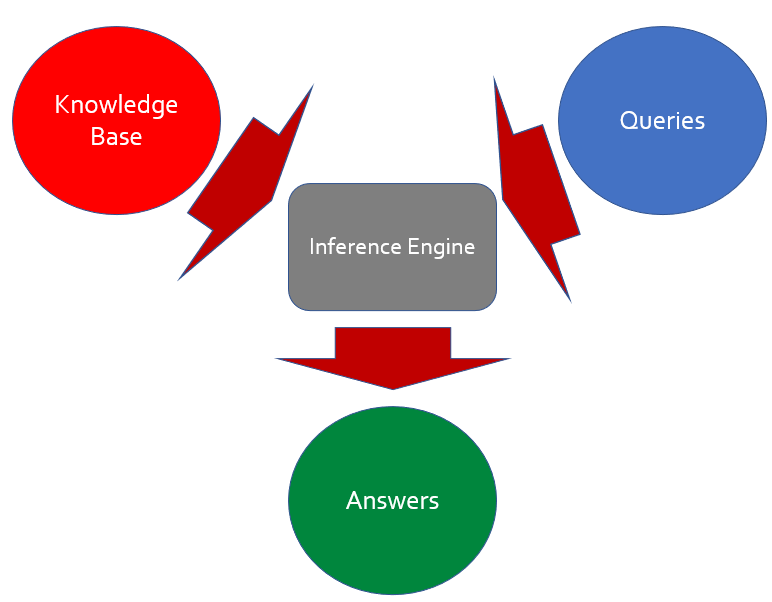
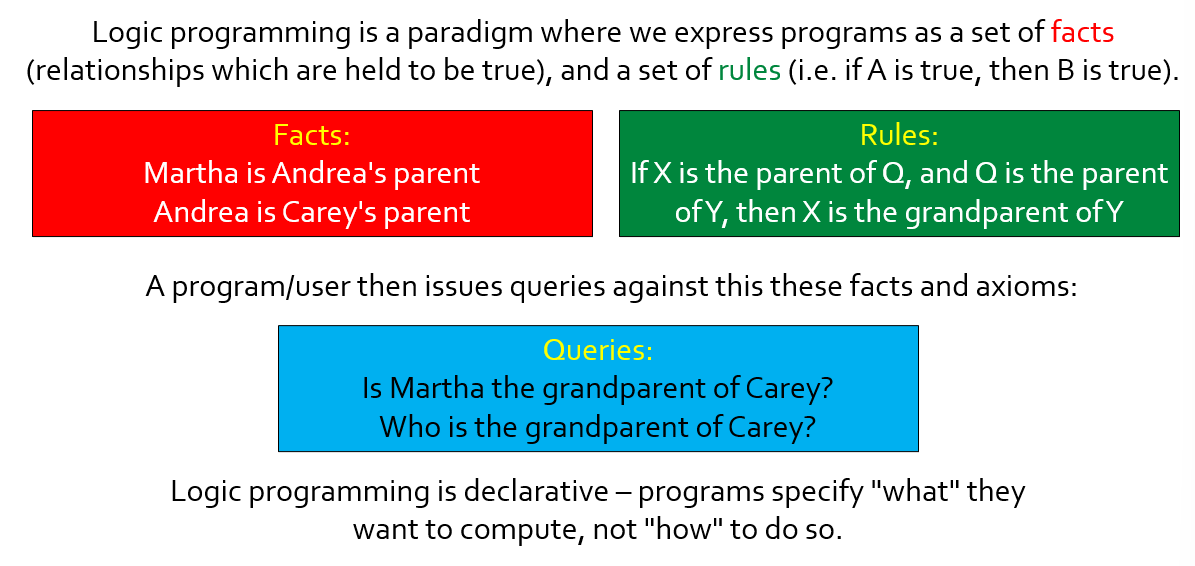
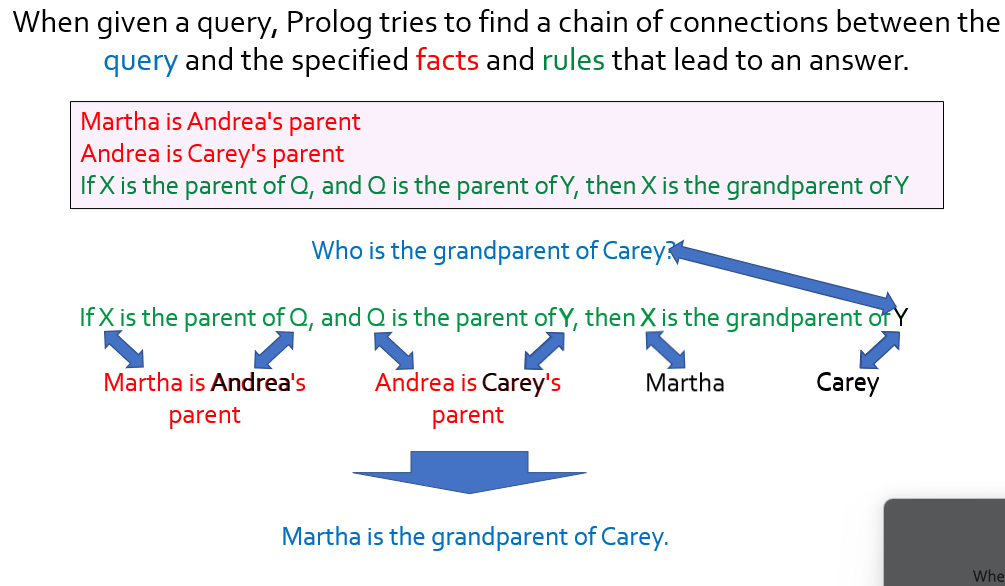
- when given a query, prolog finds a chain of connections bw query, facts and rules
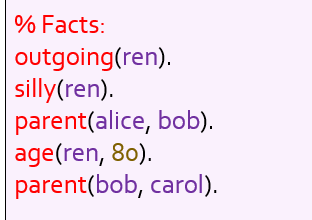
- declarative statement about the world
- the relationship/fact is a
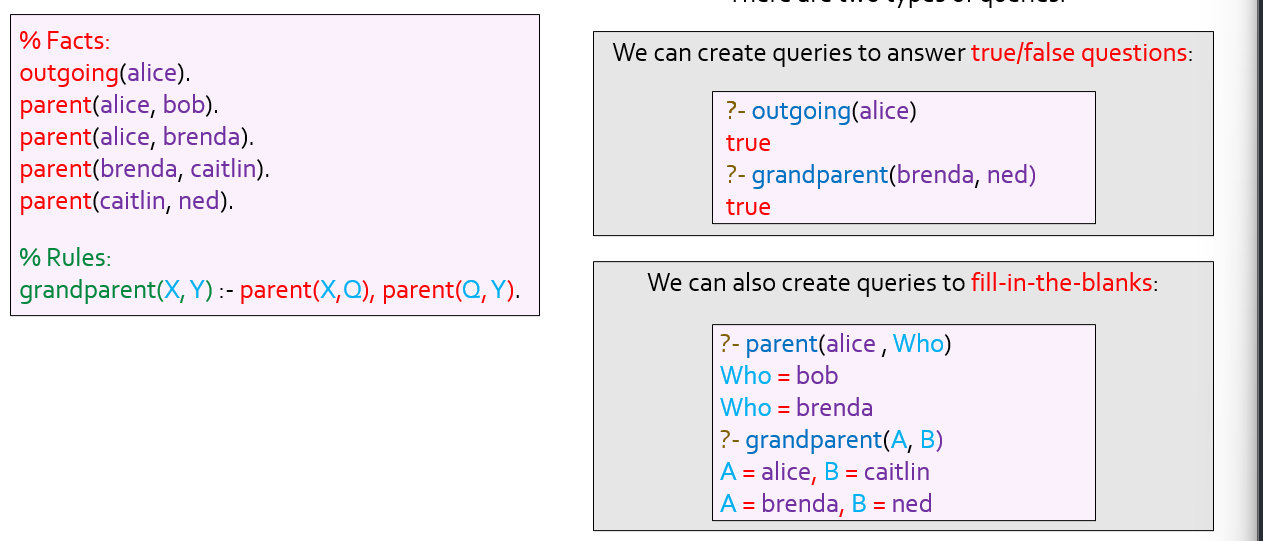
functor(red), the operands are the objects the functor operates on and are calledatoms(purple)- we can specify order of facts/rules
- we can specify order of facts/rules
- functors and atoms must be all lower case and are static assertions not function calls
- facts can be nested deeply

Rules
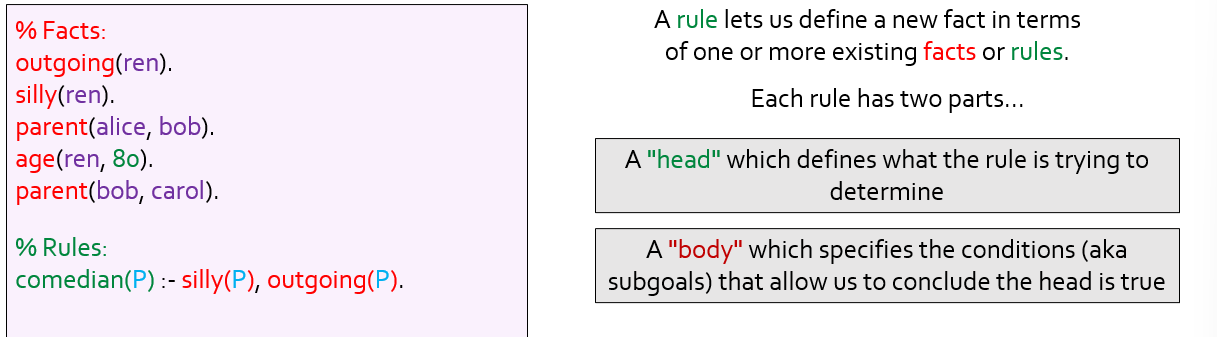
- lets us define a new fact in terms of other existing facts or rules
- rules have a
head(green) andbody(red) - a comma separating a rule’s body represents a logical
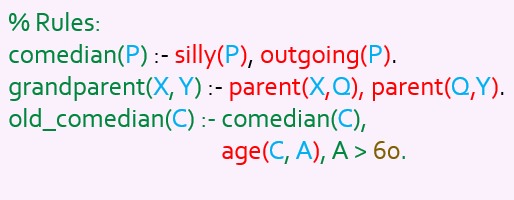
AND(union) - we can define more complex rules using known facts with logical ands and
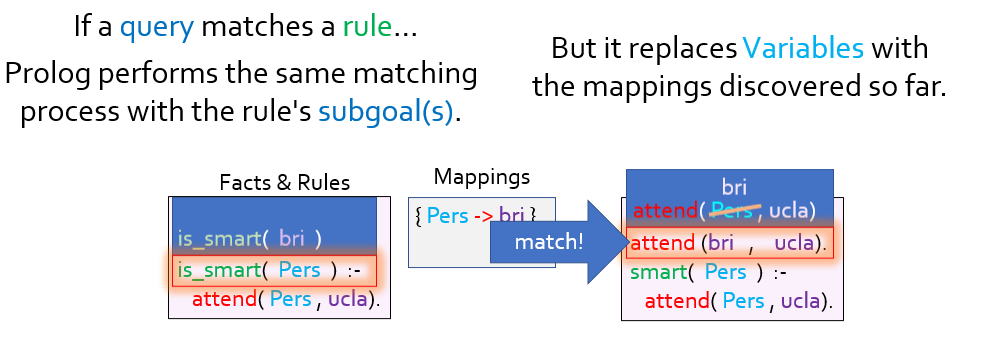
variables(blue, capitalized) which are used as placeholders for atoms - recursive rules using pattern matching
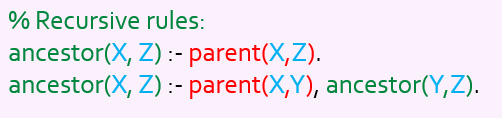
- beware infinite looping
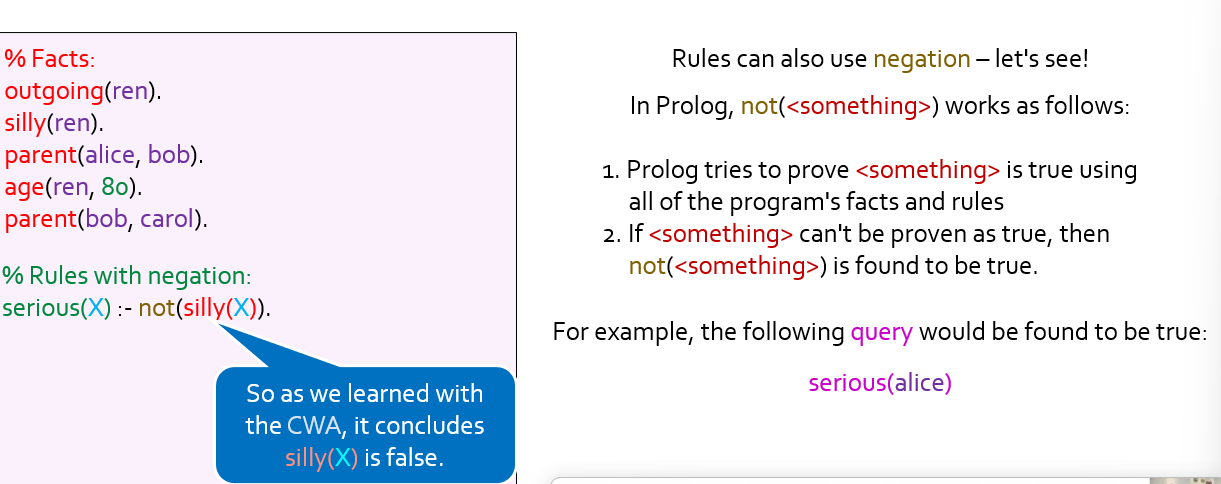
- closed world assumption (CWA) - prolog evaluates true queries iff they are true, else false (not unknown)
Negation
- CWA -
Queries
- either T/F queries or fill in the blanks queries, the query atom is represented by a variable (capital)
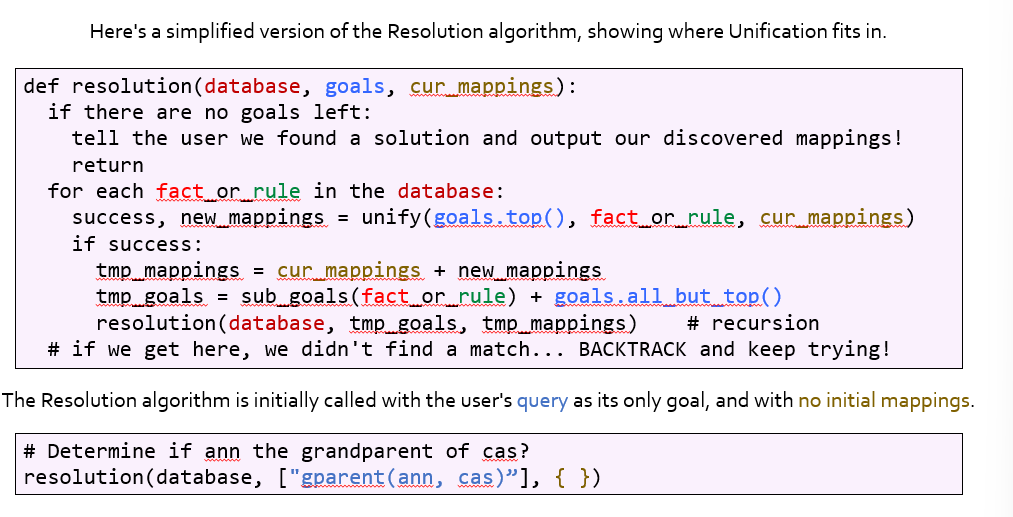
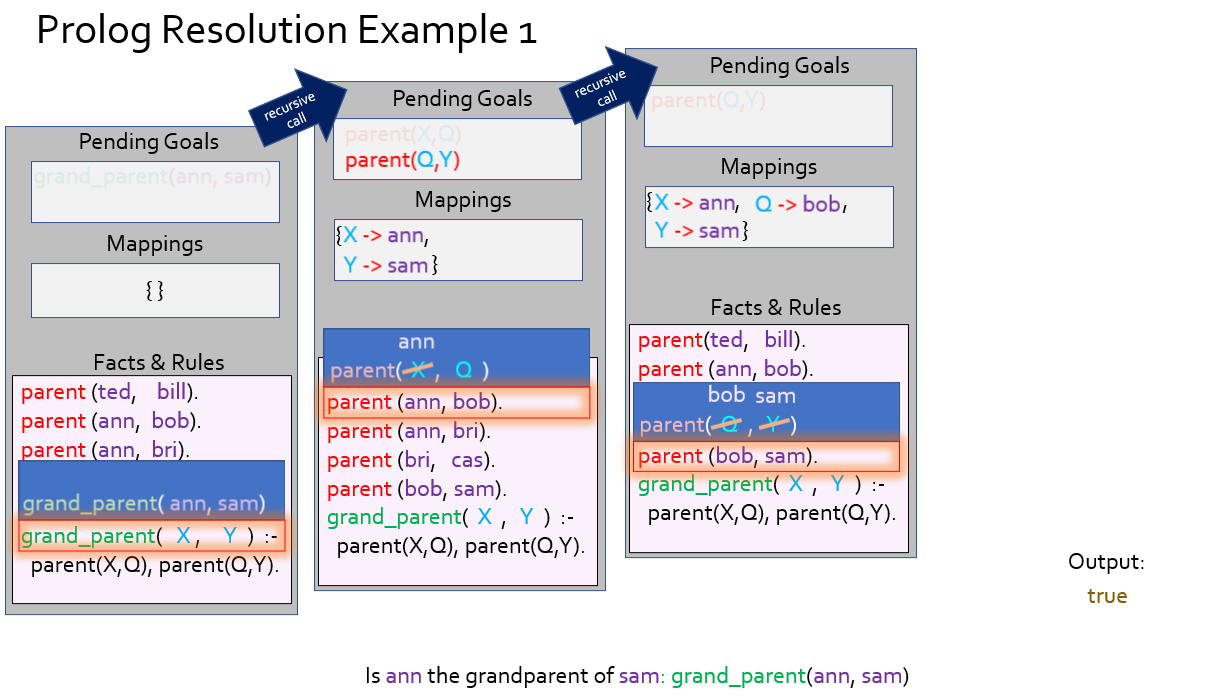
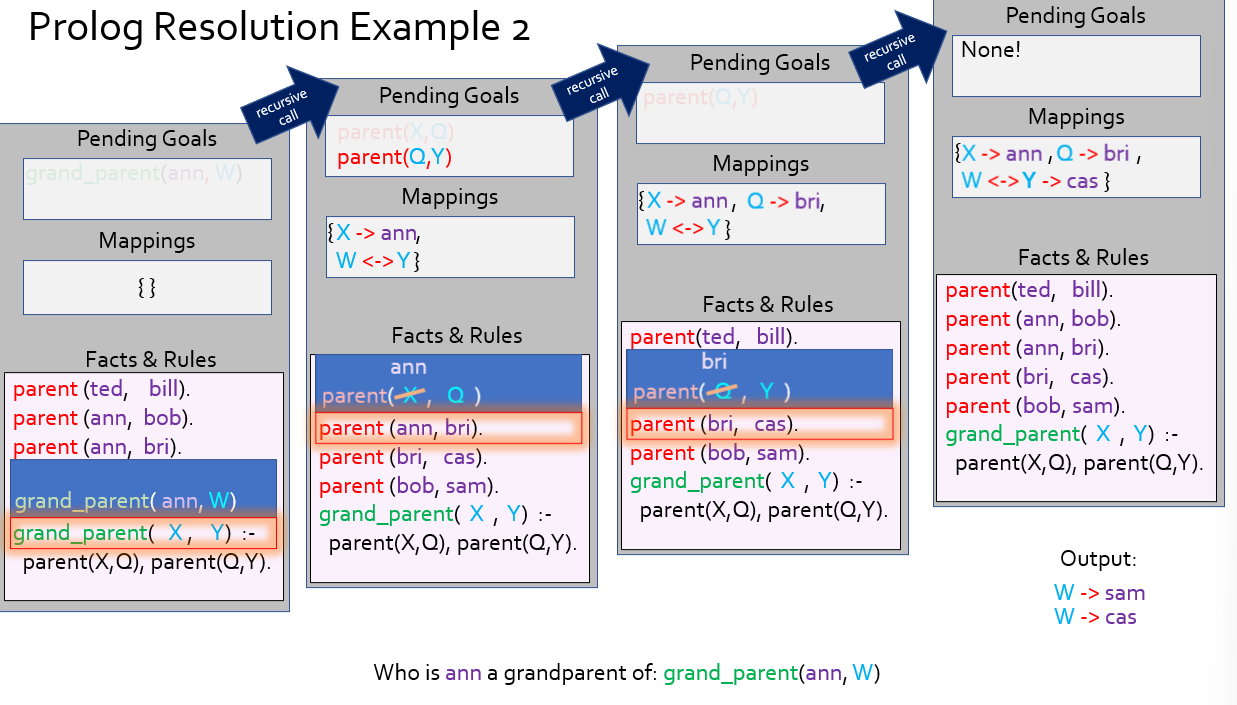
- resolution is the process of evaluating a query
Resolution
- occurs top down with each fact and rule
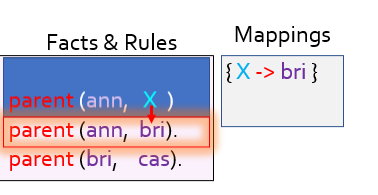
- when prolog finds a matching it makes an association of the variable in the query to the matched fact/rule and continues until no more true matchings and backtracks
- E.g., true/false query
- E.g., true query for multiple values
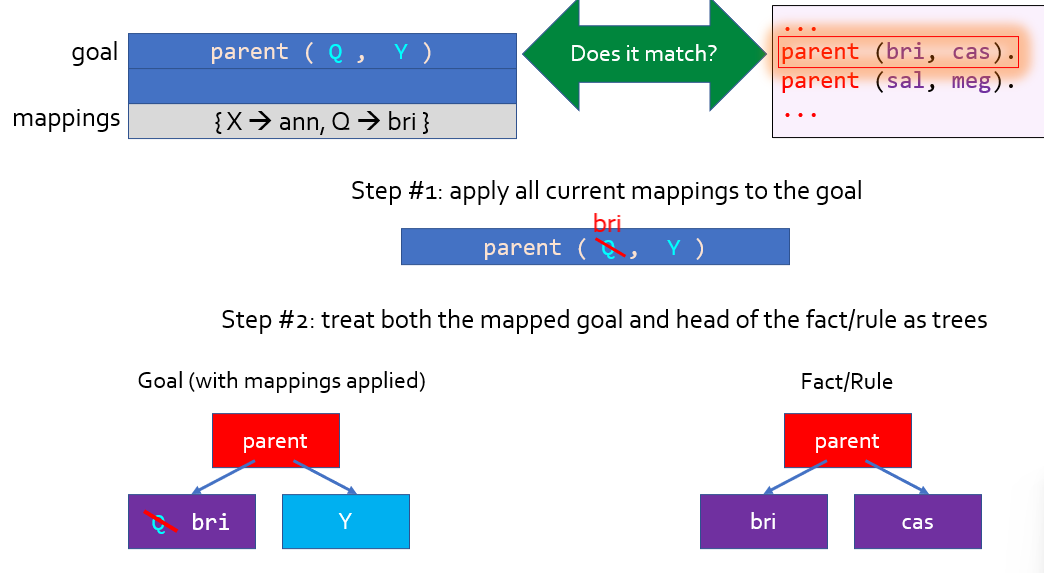
- the step of resolution that matches a single goal and a single fact/rule
- thus resolution performs many unifications
Matching facts/rules to goals
- matching a rule/fact to a goal works using a tree
- the rules of matching are the following:
- the numebr of children is called the functor’s
arity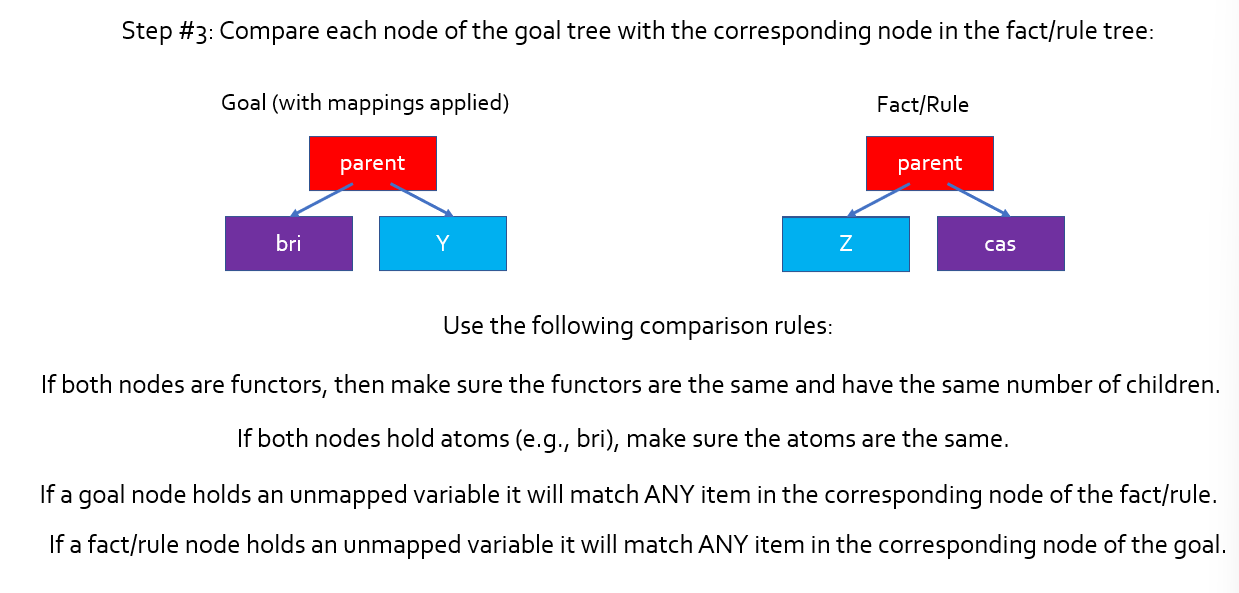
- the numebr of children is called the functor’s

Lists
- prolog lists can contain numbers, atoms, or other lists
- processing using both pattern matching and unification to process lists -> done with facts and rules
- sps a rule of vars:
is_same(X,X)- querying
is_same(lit,lit) -> true - querying
is_same(ucla,usc) -> false
- querying
- list pattern matching
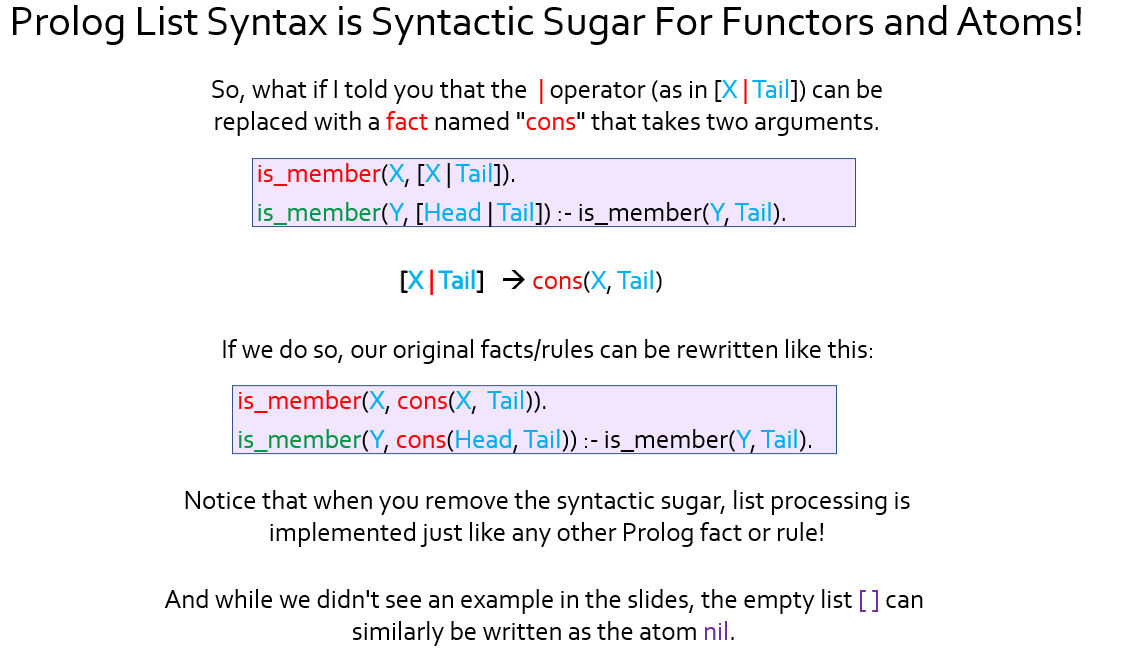
[X|XS]is same as haskell’s(x:xs)- e.g.,
is_head(X,[X|XS])true if X matches X as the first item in the list - so
is_head(lit,[lit,dank,snack]) -> true
- e.g.,
- list pattern
[X,Y|XS]is equiv to(x:y:xs) - checking elem of list
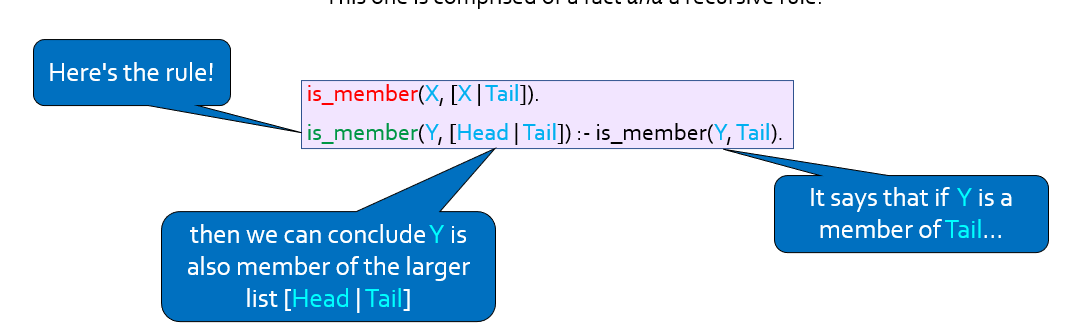
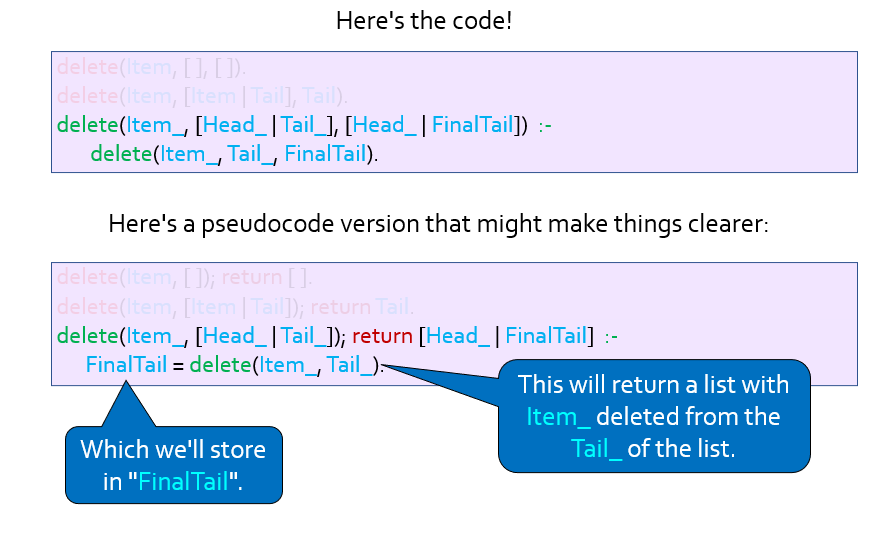
- modifying lists, e.g. deleting from a list can be used in many ways
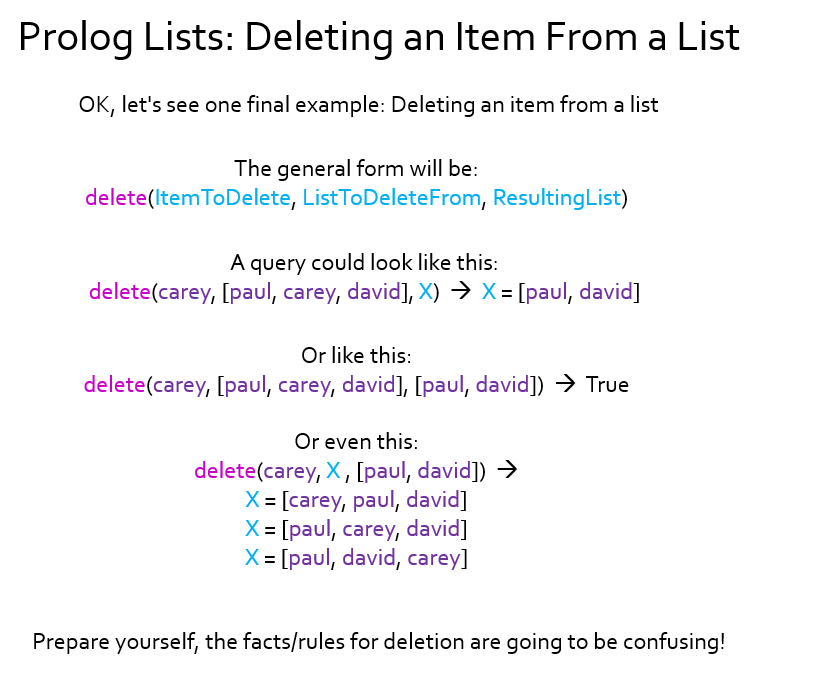
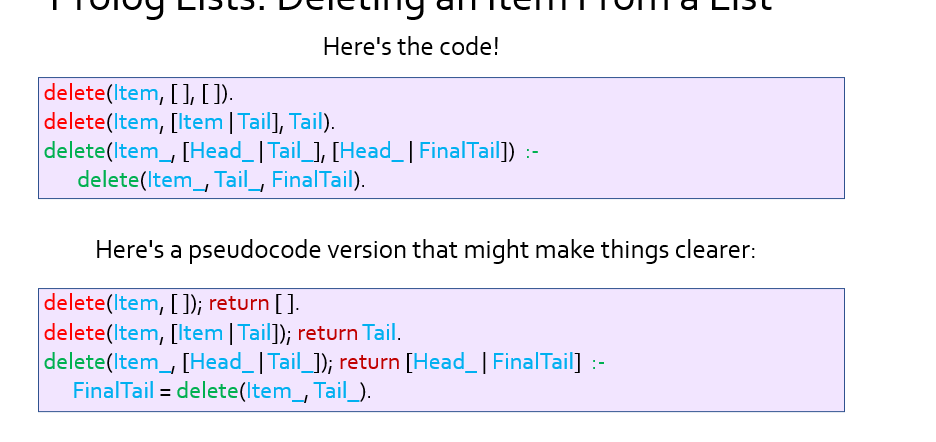
- how it works:
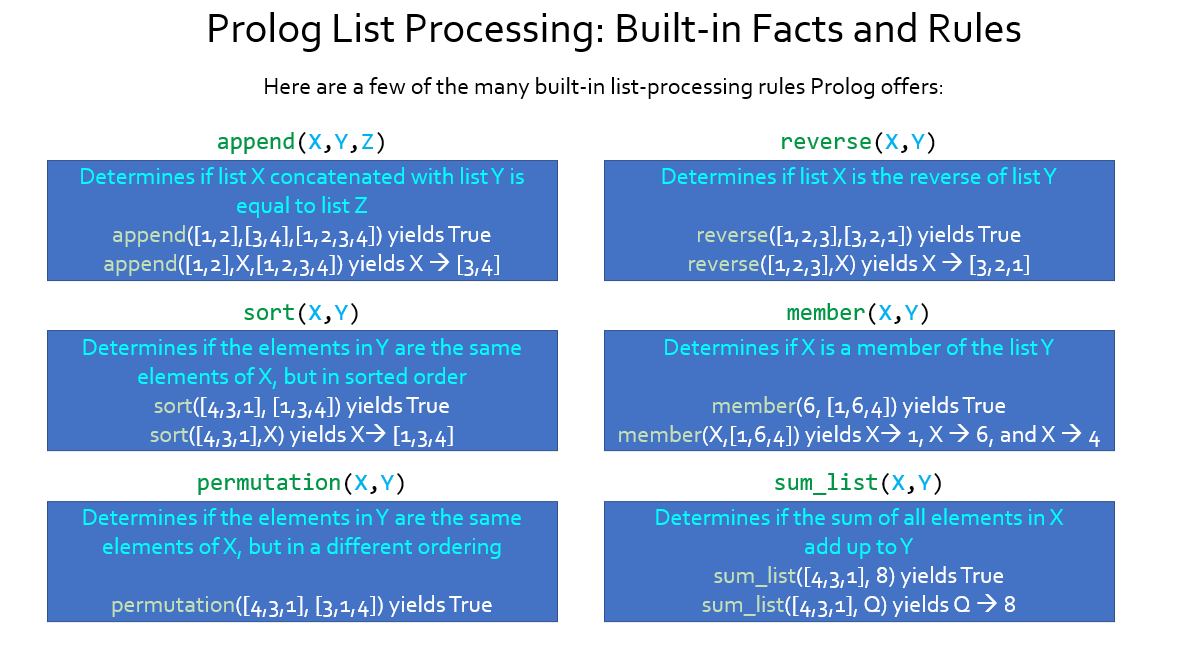
- built in facts/rules on lists