6 - Object Oriented Programming
ucla | CS 131 | 2023-11-20 22:44
Table of Contents
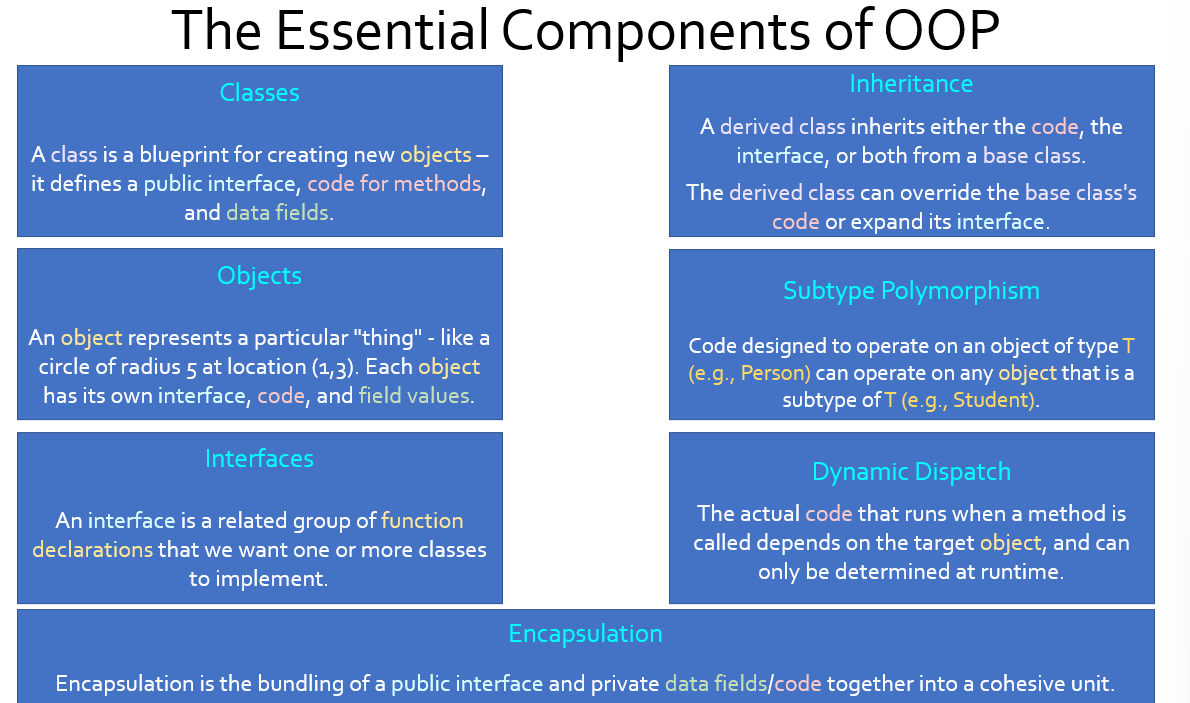
- OOP Overview
- Classes, Objects, Interfaces, Encapsulation
- Inheritance
- Aspects of Inheritance
- Subtype Polymorphism
- Dynamic Dispatch
OOP Overview
History
-
Recordwas the first idea of the object-oriented paradigm - The
Simulalang implemented classes and objects with data and funcs, instantiation into objects, dot notation, inheritance, virtual operations, polymorphism/dynamic dispatch -
Smalltalkimplemented a variation for more imperative langs where everything is an object like python -
Javahad a crazy popularity and rose to prominence where it introduced bytecode compoilation and created specific JVM (interpreters) for each device it woudl run on instead of C/C++’s bare metal implementationsClasses, Objects, Interfaces, Encapsulation
Classes
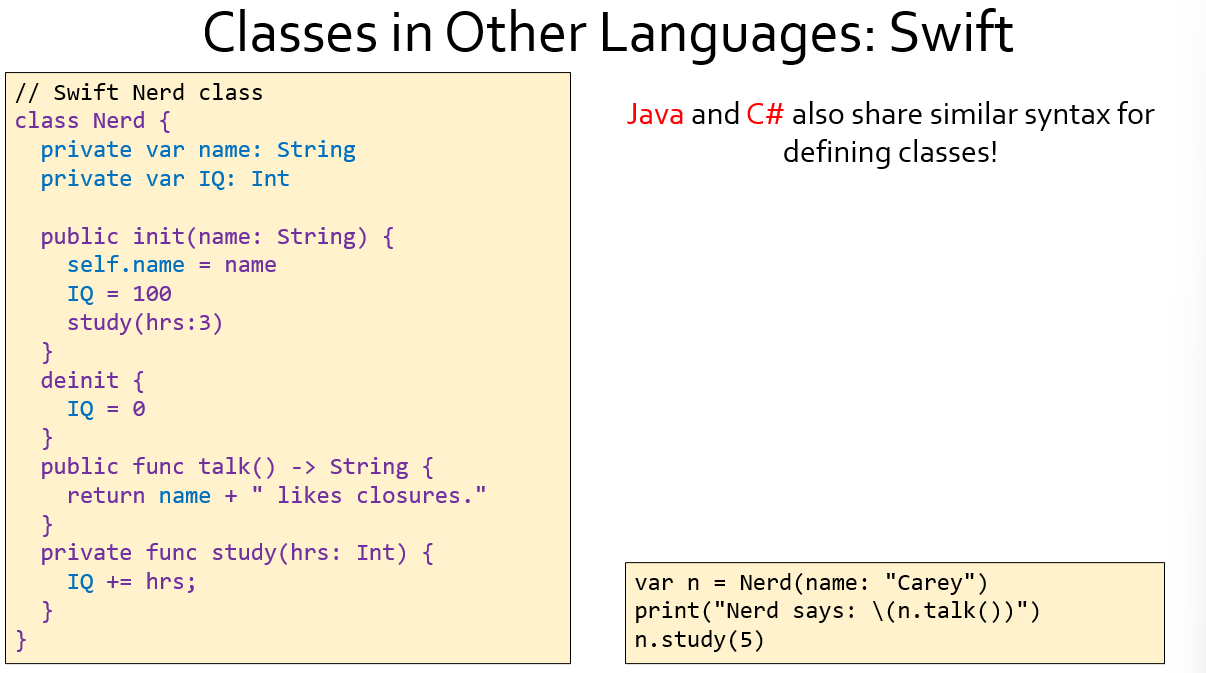
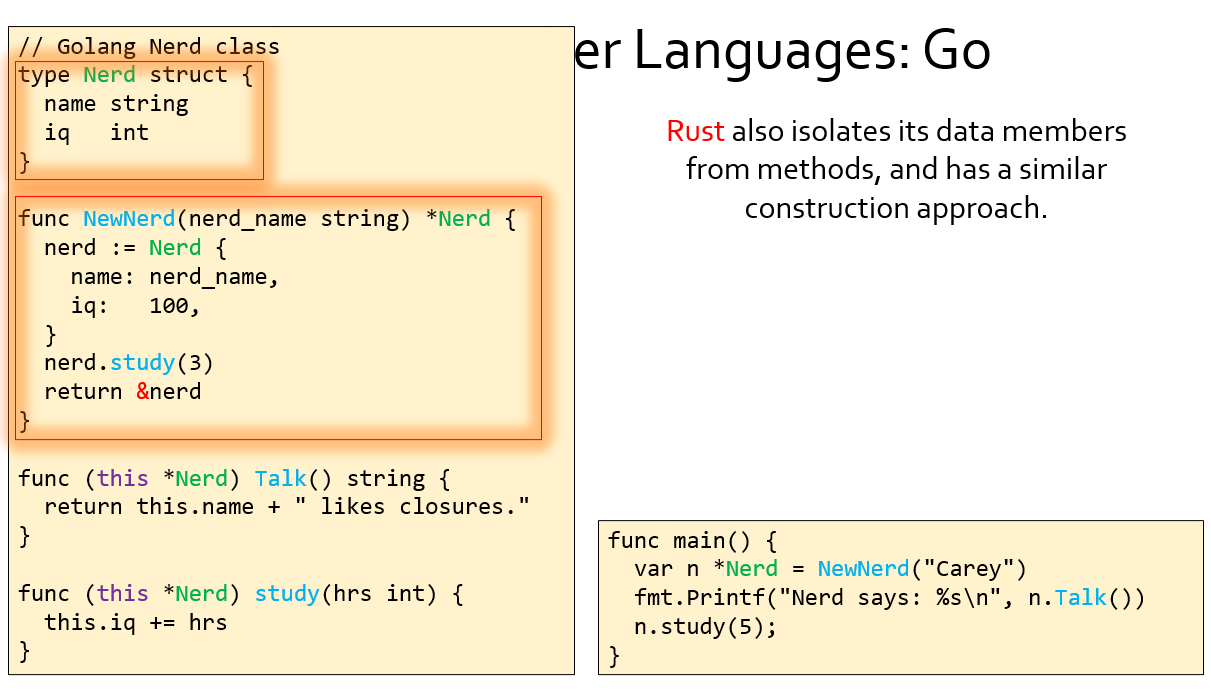
- Interfaces (public methods), fields (member variables), private methods/fields, method implementations
- e.g. swift and Golang class implementation
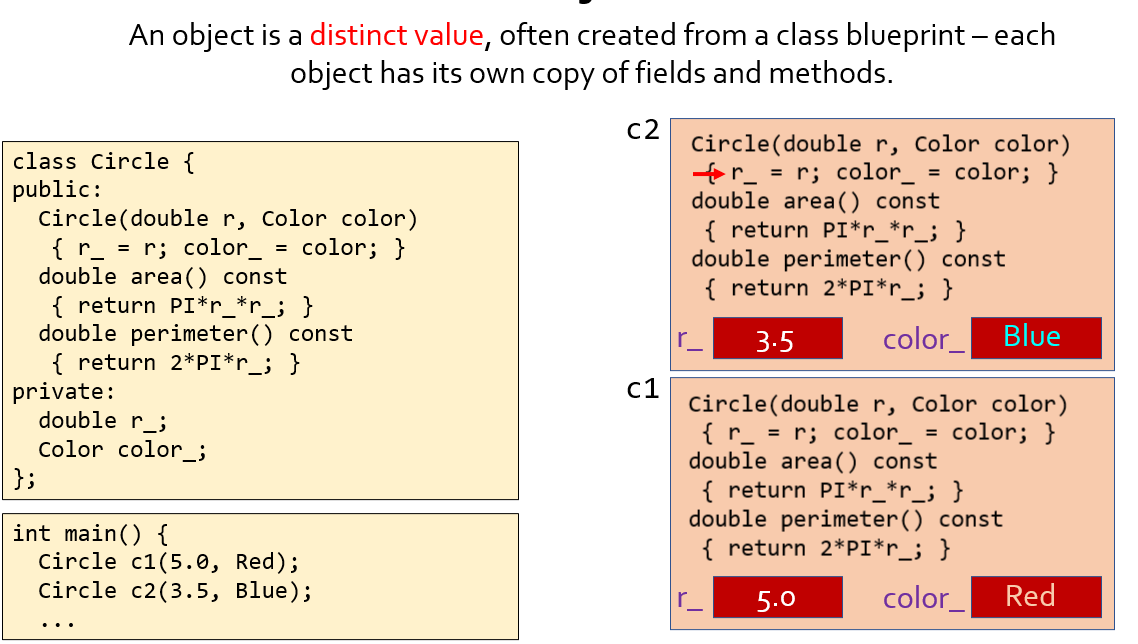
- a distinct value often from a class blueprint that contains its own copy of fields and methods
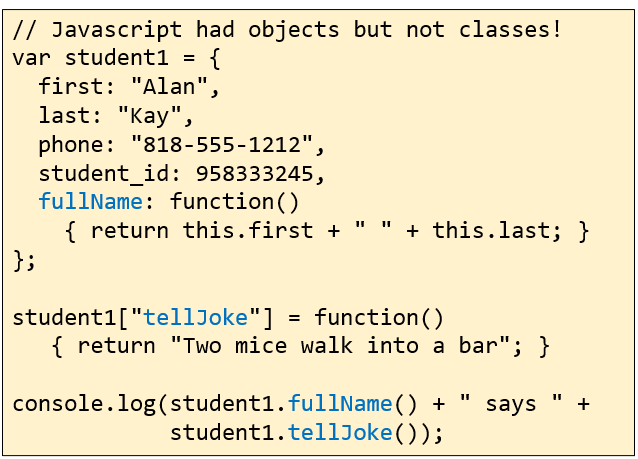
- notr all langs have classes, e.g. JS only has objects in a record/struct like format
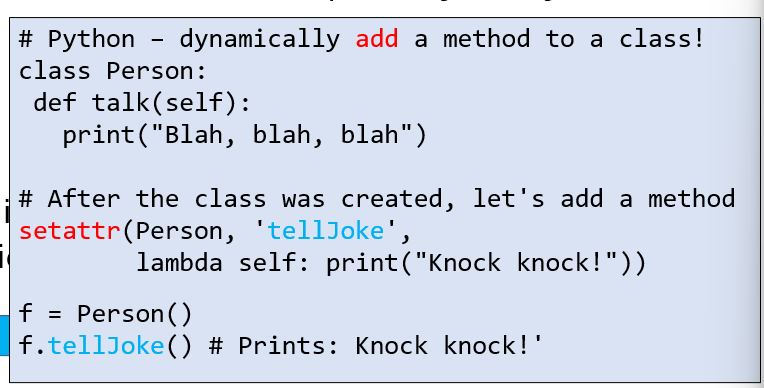
- in some langs you can even dynamically add methods/fields to classes/objects
Encapsulation and Access Modifiers
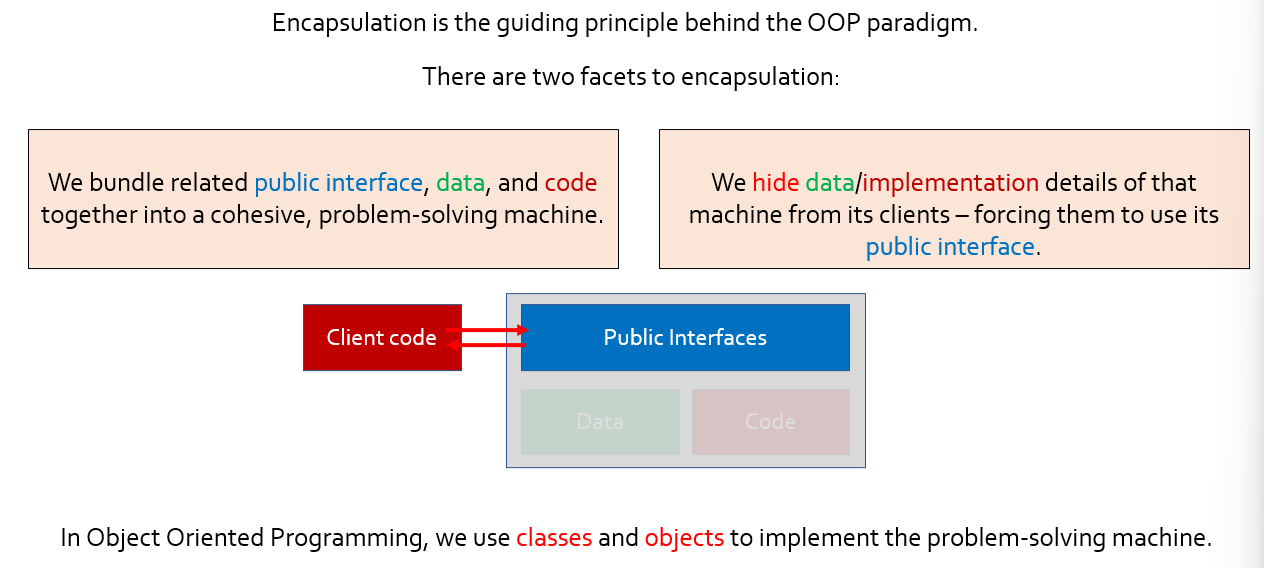
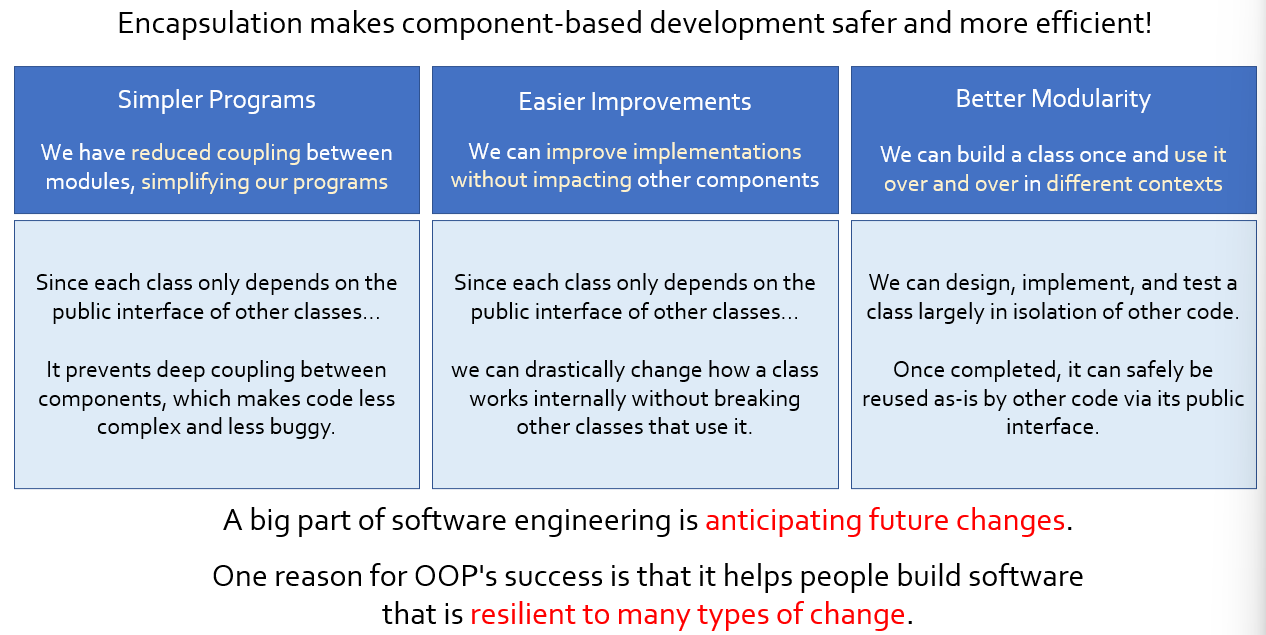
Encapsulation
Access Modifiers
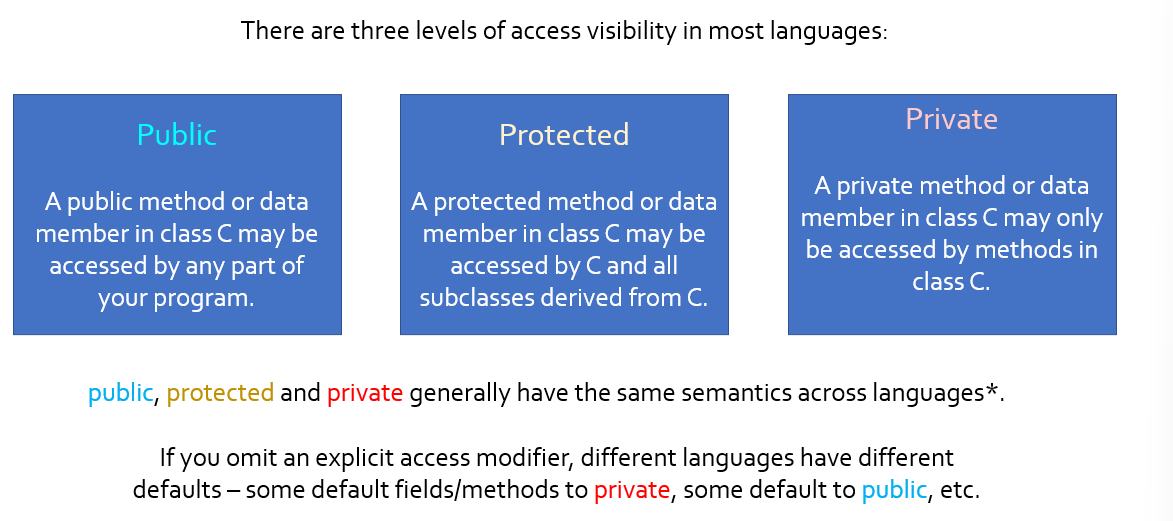
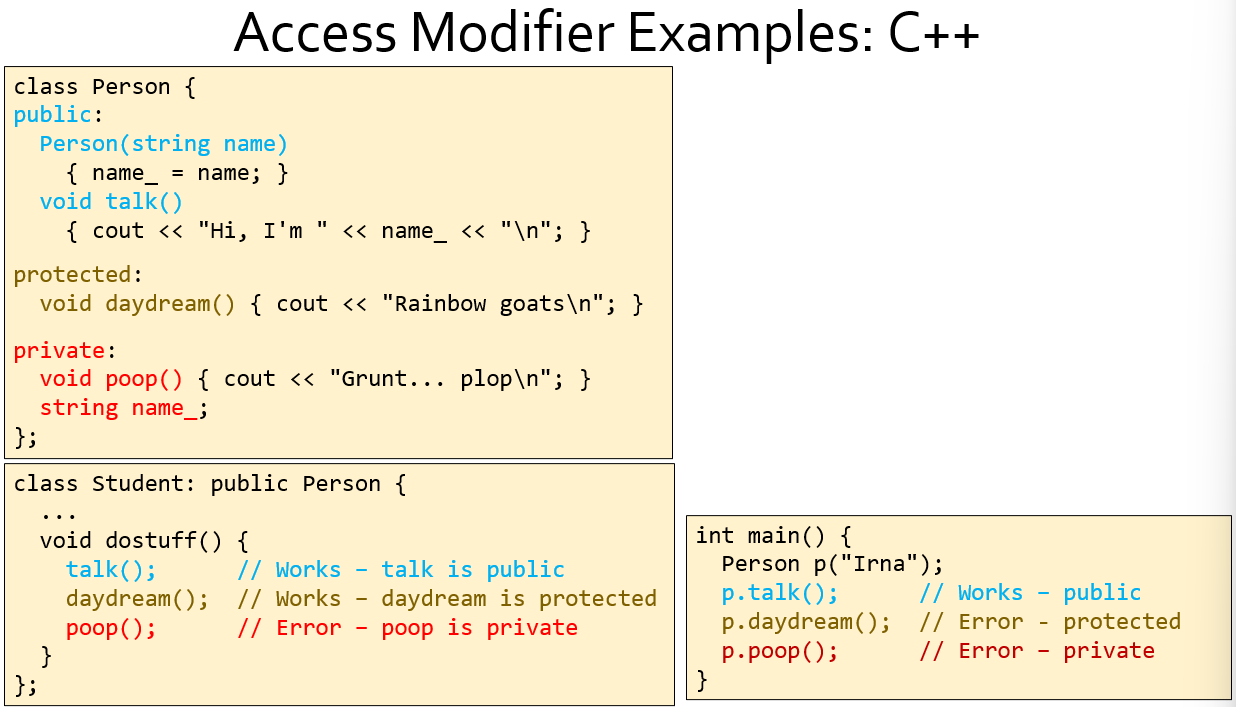
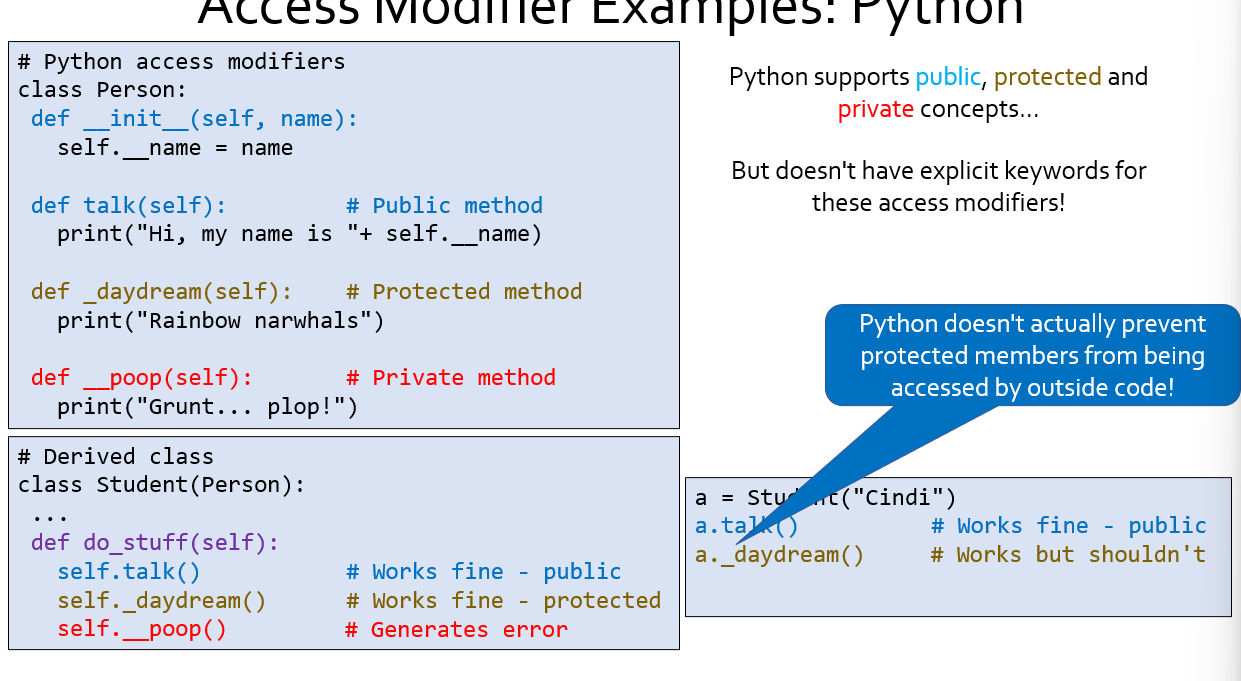
- determine the visibility of methods and fields to external code (including from inherited classes)
- e.g., access in C++ and python
- best practices:
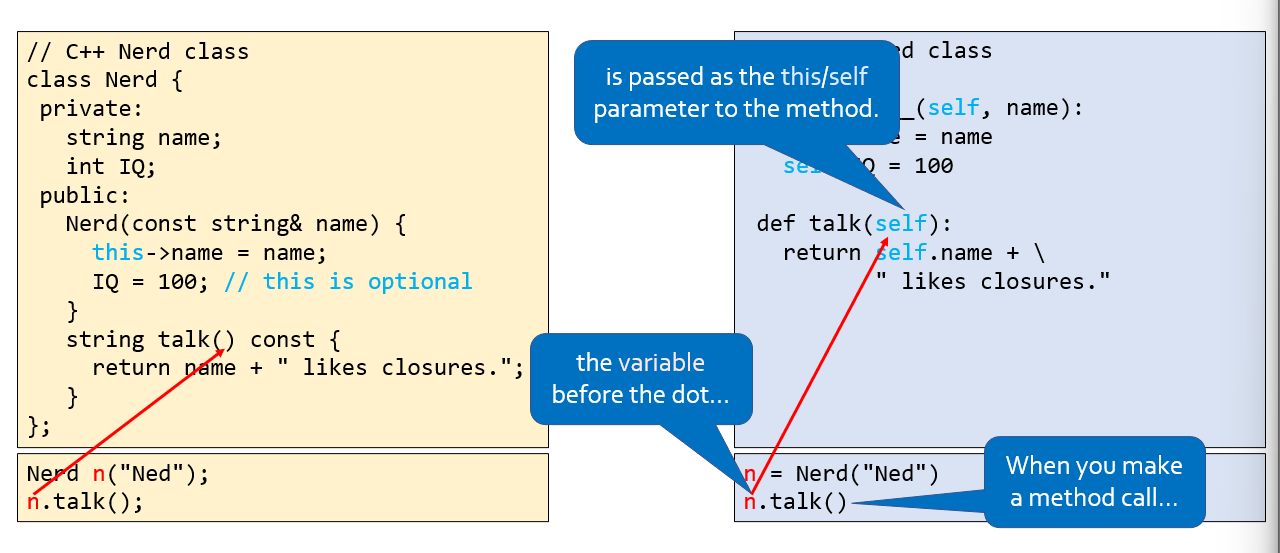
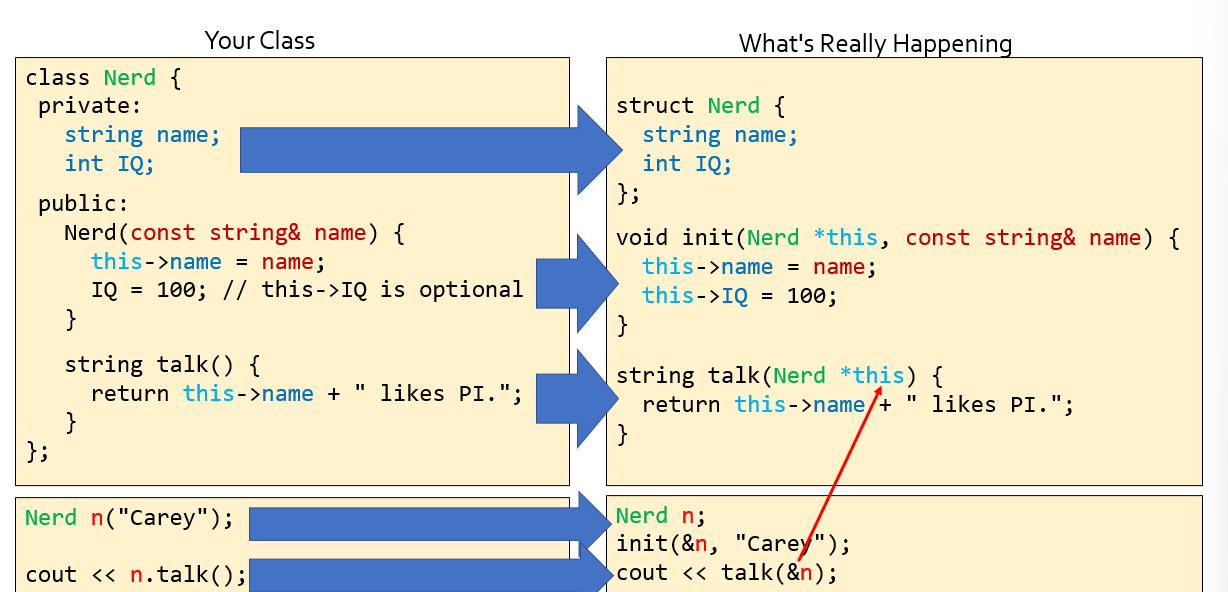
- a special parameter (sometimes explicitly required in the formal parameters of member functions e.g., python) that points to the object the function is operating on
- this becomes much more important when inheritance is introduced
- an example with C++ and Python
- the keywords are also syntactic sugar because the object is actually passing the object reference as another parameter to the class’ function call and is usually only used to distinguish bw member fields and formal params
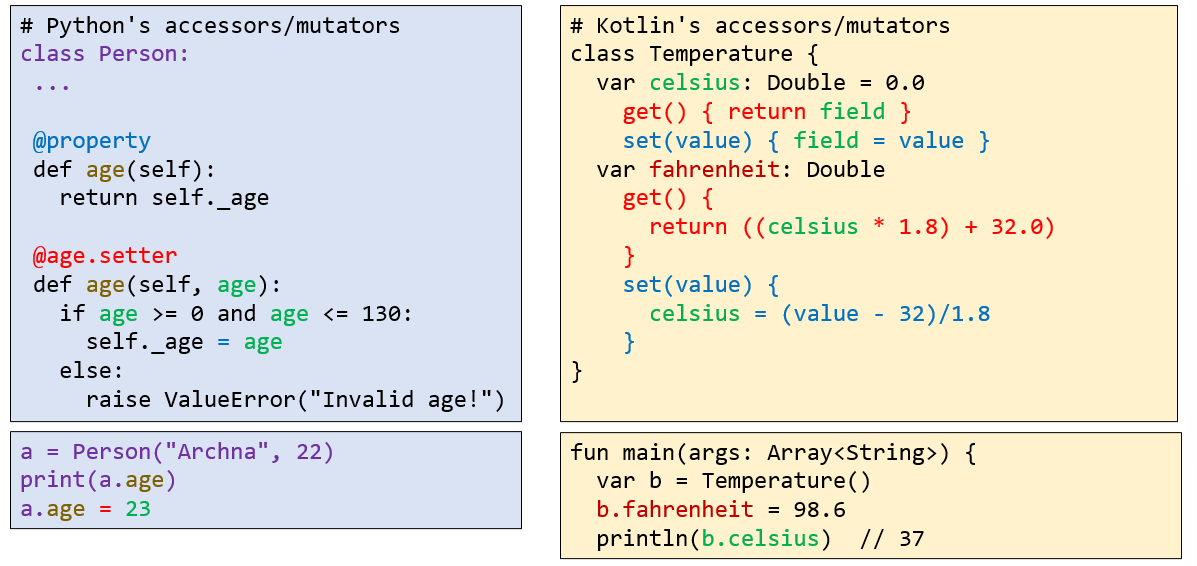
- to access/mutate private member variables, we can create public getters/setters to do so
- some langs also have defined methods to create getters/setters
- approaches:
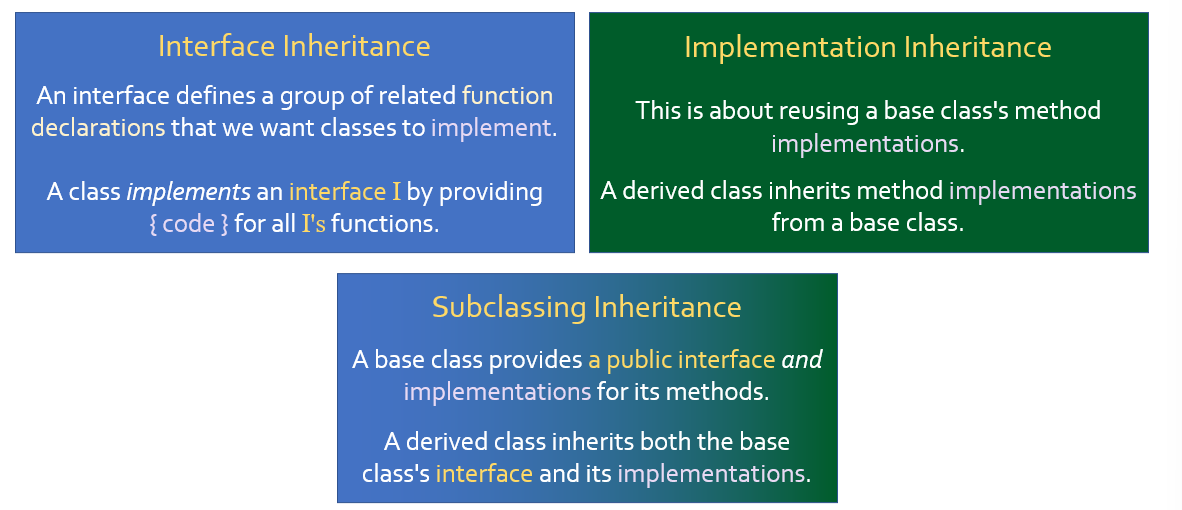
Interface Inheritance
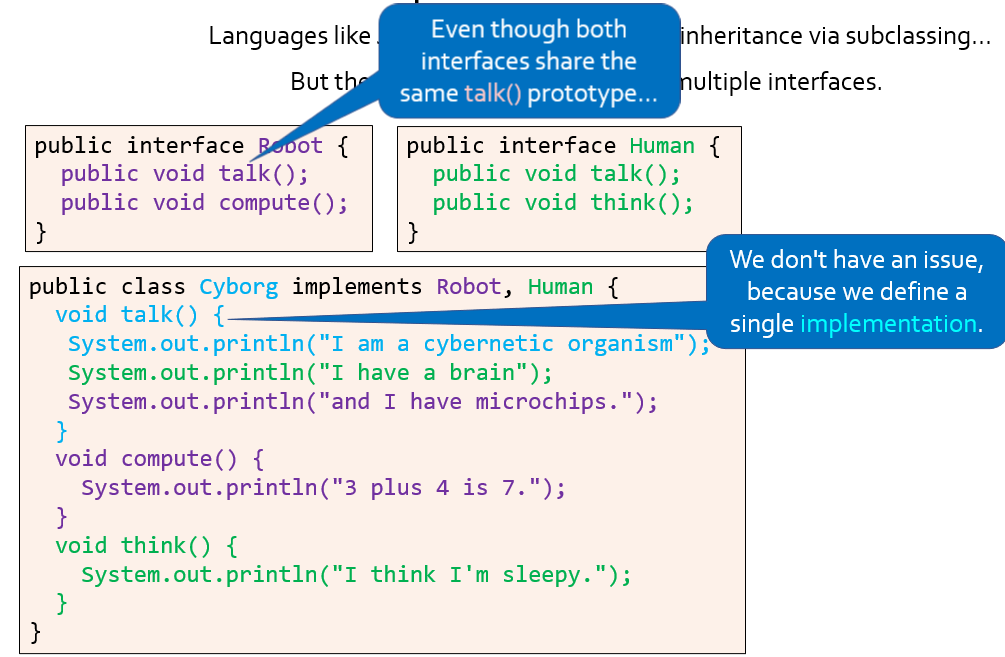
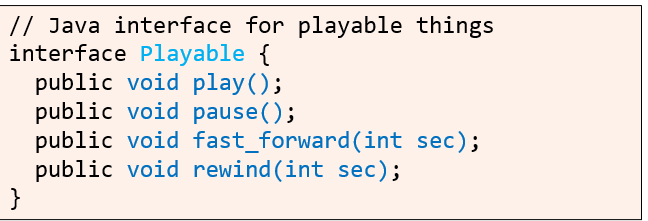
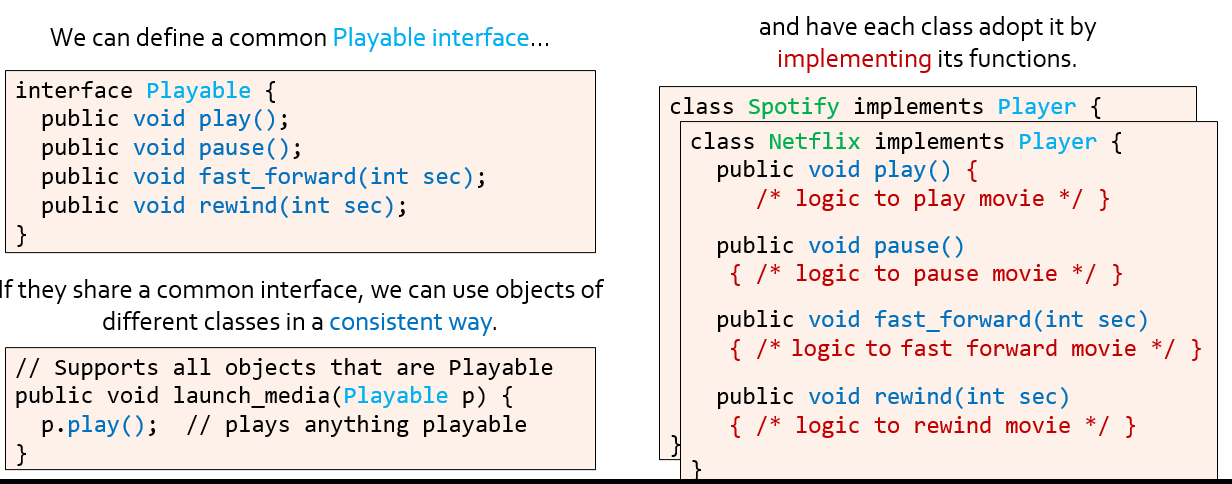
- an interface is a collection of unimplemented method declarations
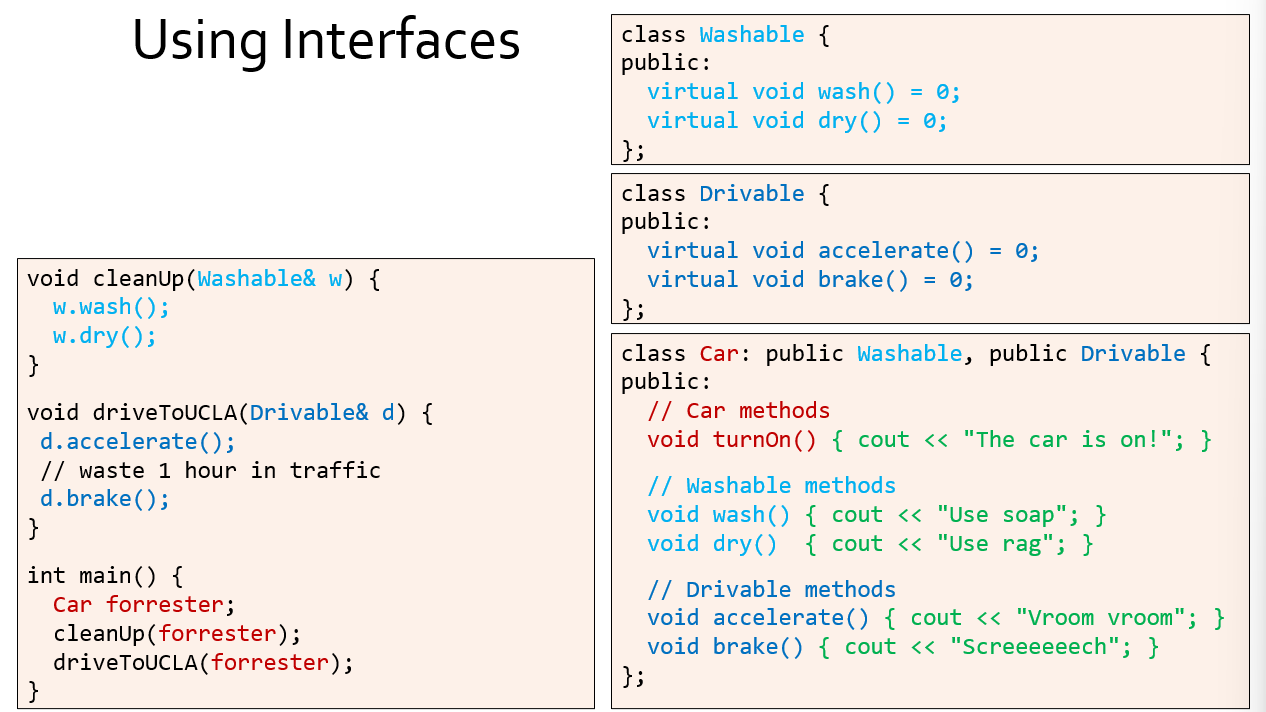
- classes can inherit from a interface and be used in the same external function because they implement the same interface
- interfaces are considered reference classes, and objects can implement multiple interfaces but must be sure to write an implementation for each
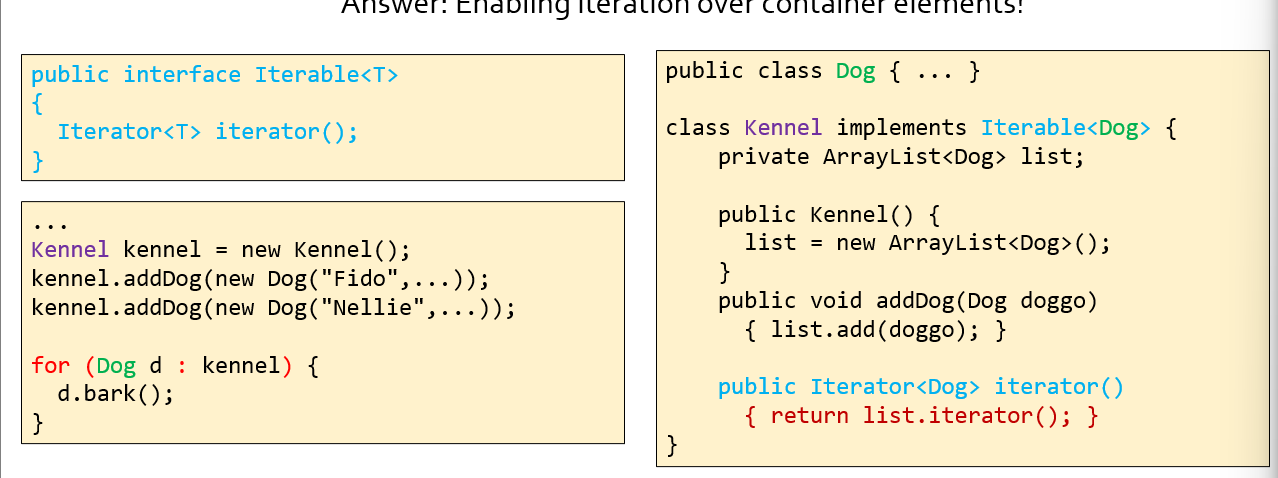
- used in Java to create iterators for user made classes
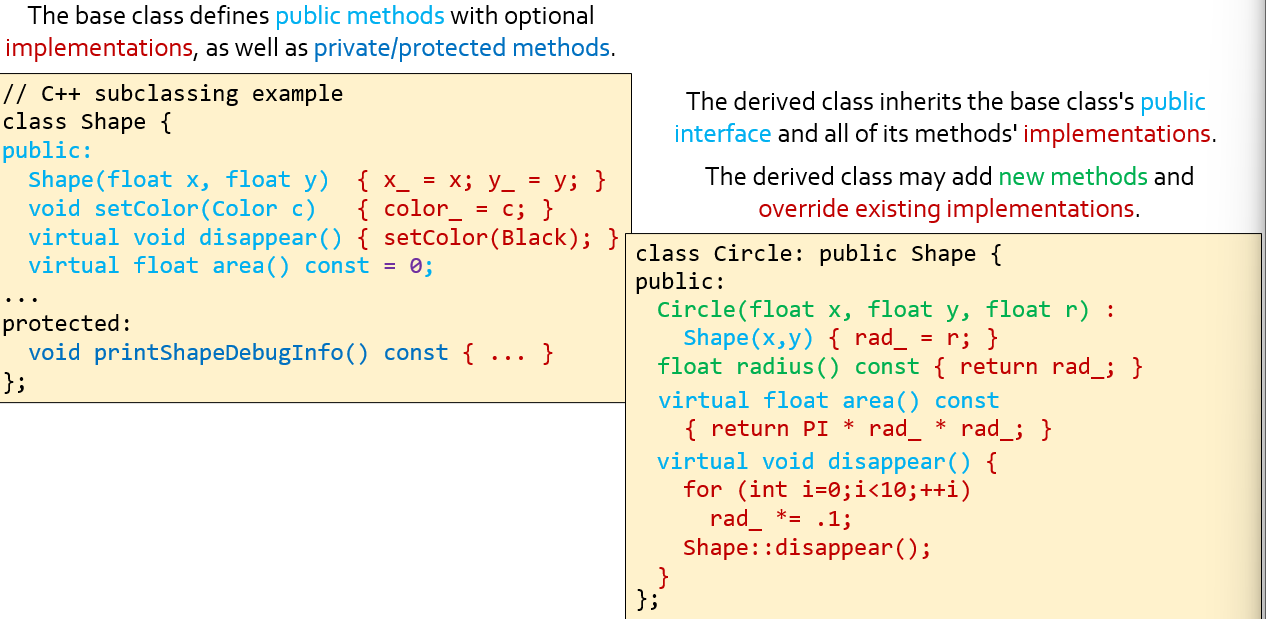
- subclass inherits interfaces and superclass implementations and may override superclass implementations and implement any abstract methods from the base/superclass
- e.g., in C++ derived (subclass) implements base (superclass) abstract methods, carres over public and protected method implementations, and can override base class’
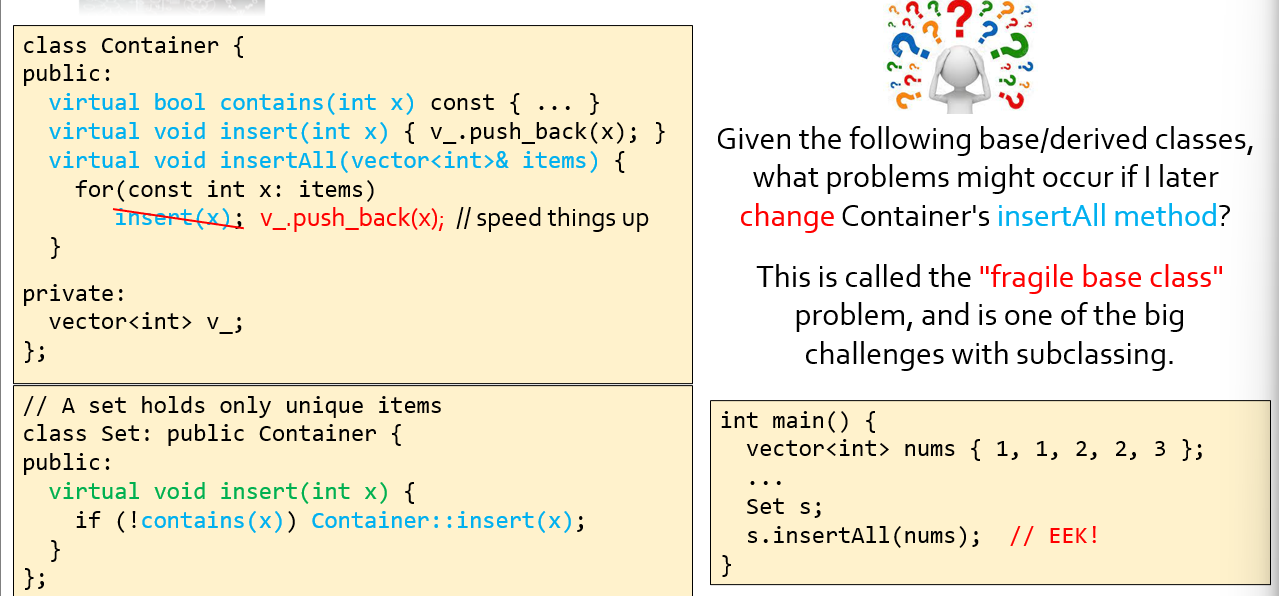
virtualmethods (either with override keyword or not - bc of dynamic dispatch and override keyword is unnecessary only for readability) - fragile base class - when a superclass method implementation is changed, it may cause logic errors when used on objects of the subclass e.g., changing the
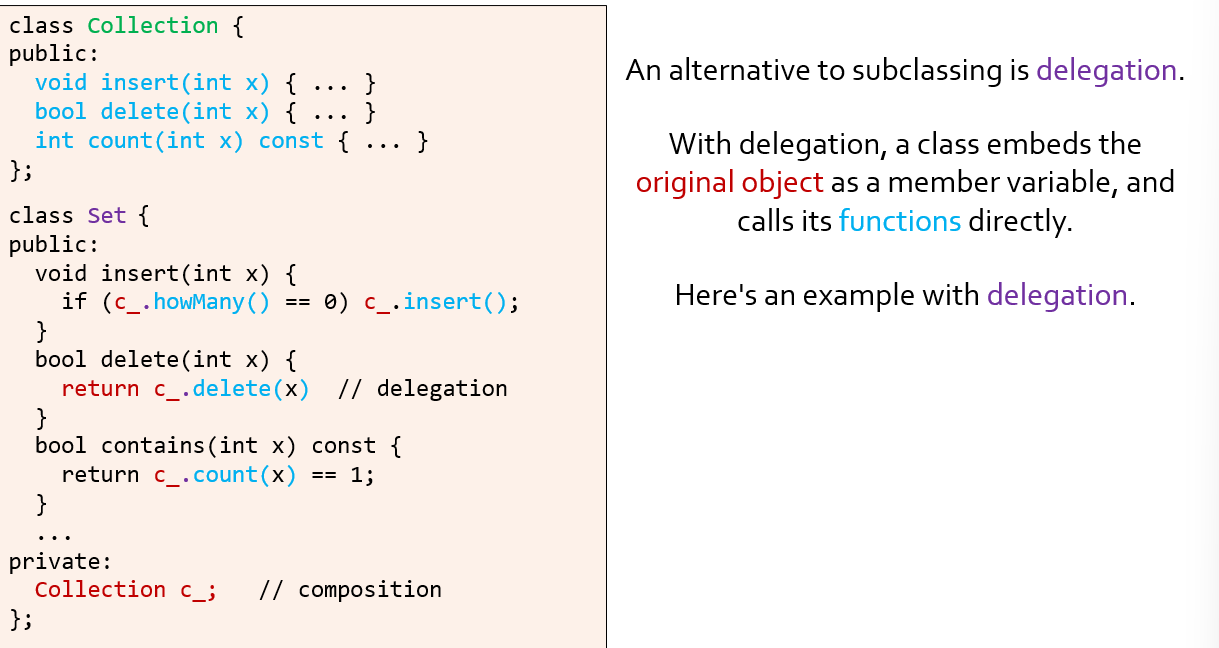
insert_allof theContainersuperclass changes how it works on an inheritedSetobject - when a derived class embeds the superclass as an object and can use it to call the superclass methods directly e.g. super() in python
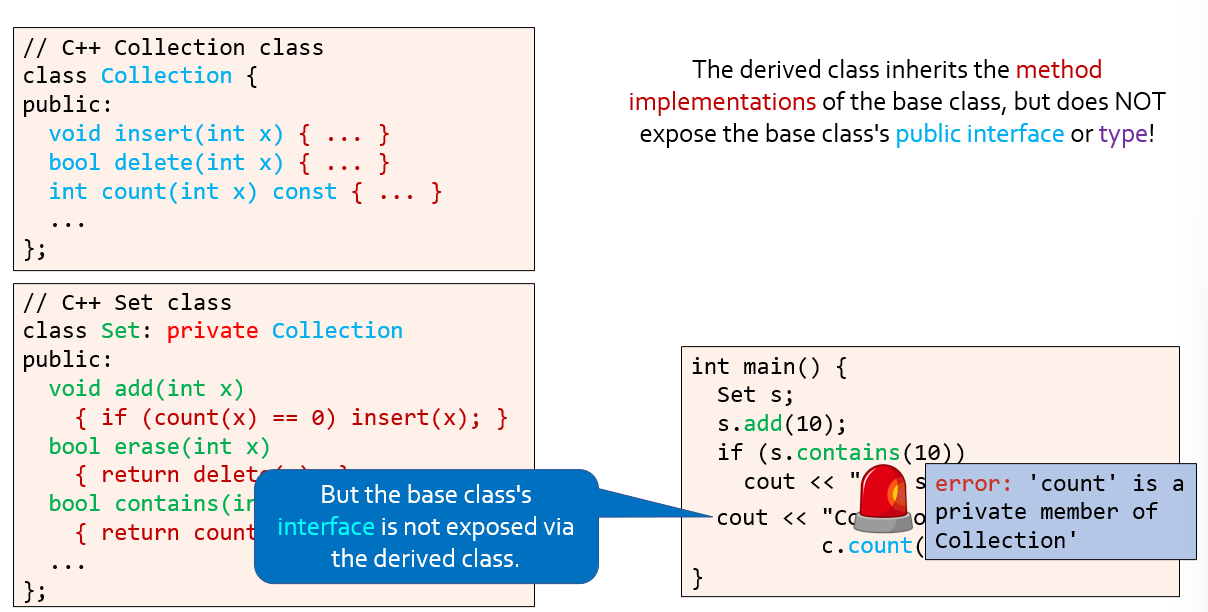
- the derived class inherits the actual method implementations privately but does not allow external code to call the superclass’ public interface (methods) only the derived class’ methods
- bad practice, instead use delegation
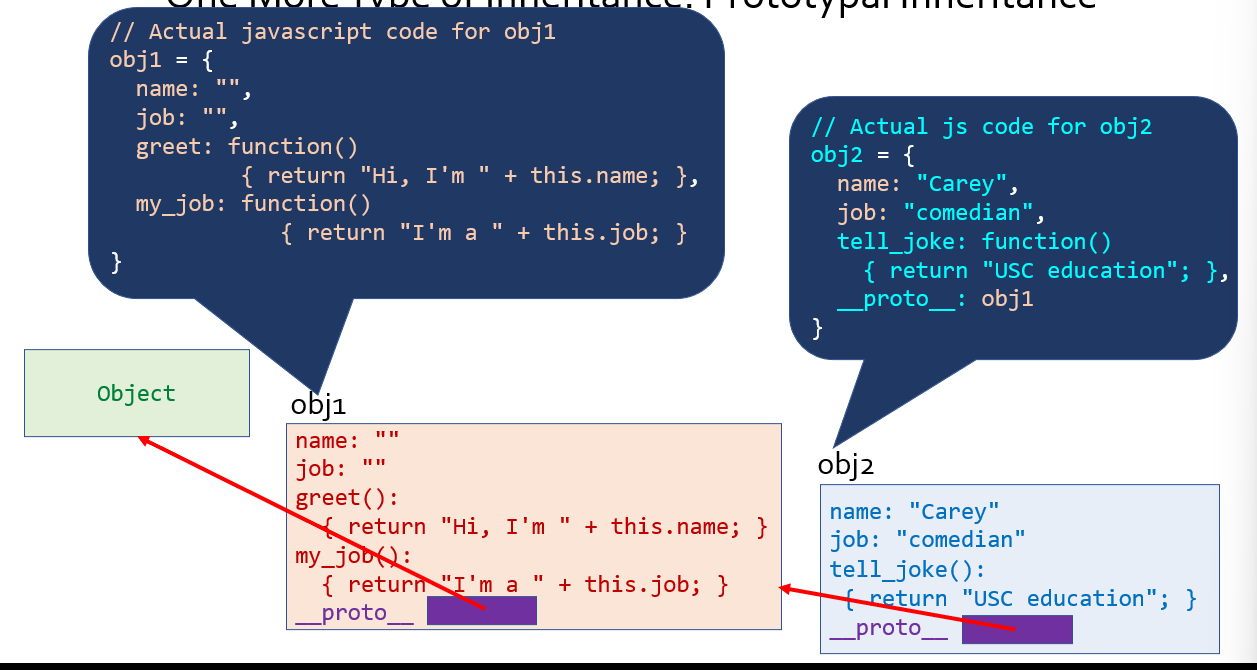
Prototypal Inheritance
- an object inherits and overrides fields and methods from another object, treated as a prototype
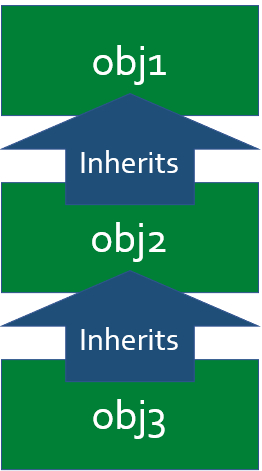
Aspects of Inheritance
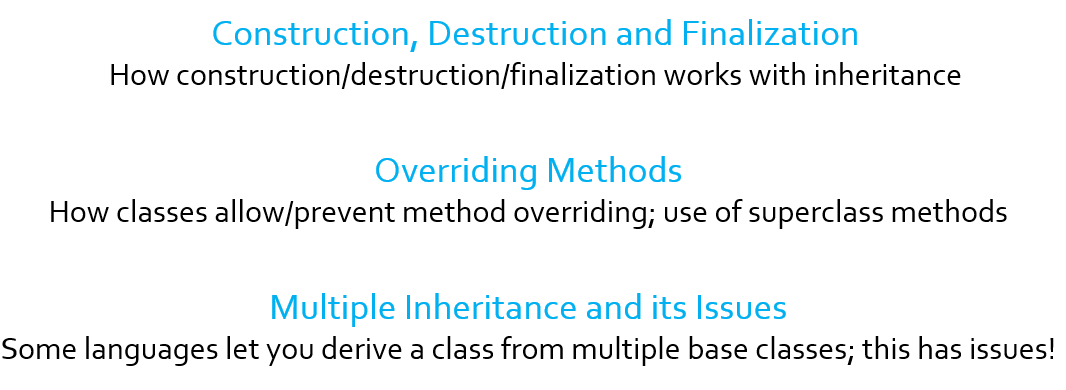
Construction, Destruction, & Finalizers
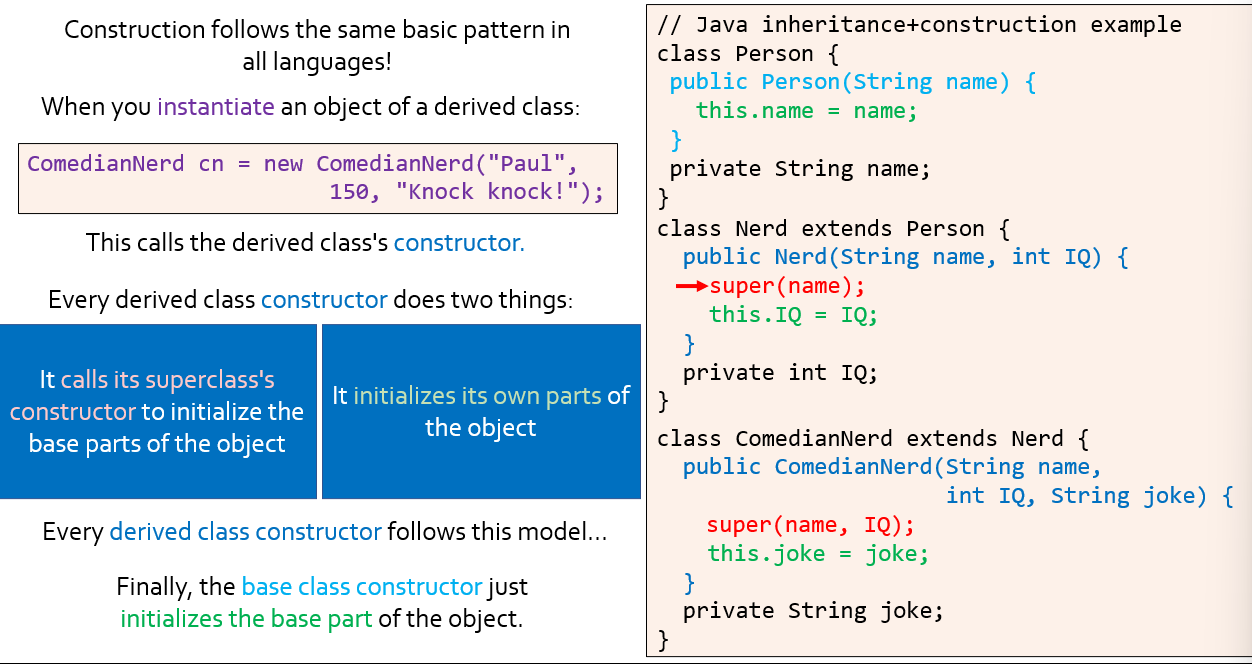
Construction
- every derived class is created as a new object which calls the derived class’ constructor
- the constructor initializes the base object by calling the base classes’ constructors AND initializes the derived class’ own methods/fields
- some langs allow the base class constructor call can be implicit e.g., in Java, no explicit
super()required call if the base class constructor takes no parametersDestruction - Destructors and Finalizers
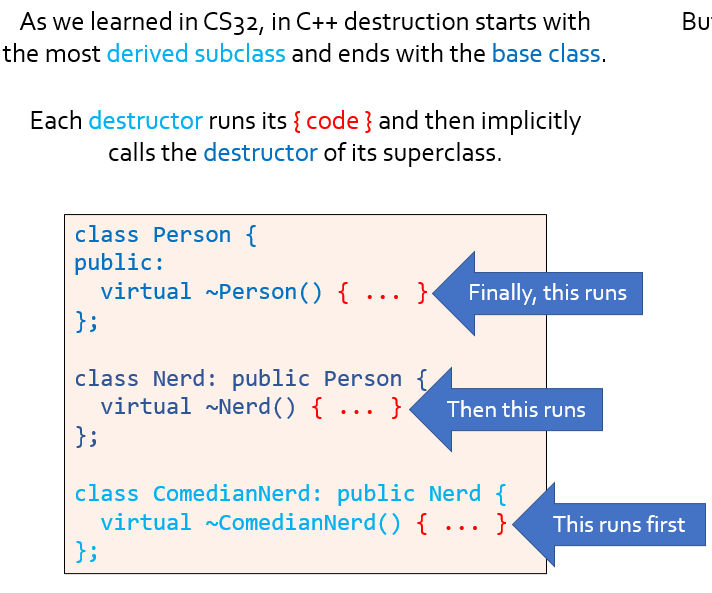
- from derived up to base, the destructor runs its destructor and implicitly calls its base class/superclass’ destructors all the way up
- some langs require explicitly calling the base class’ finalizer within the derived class’ finalizer while others do it implicitly (e.g., C++)
- recall finalizers are not guaranteed to run
Overriding
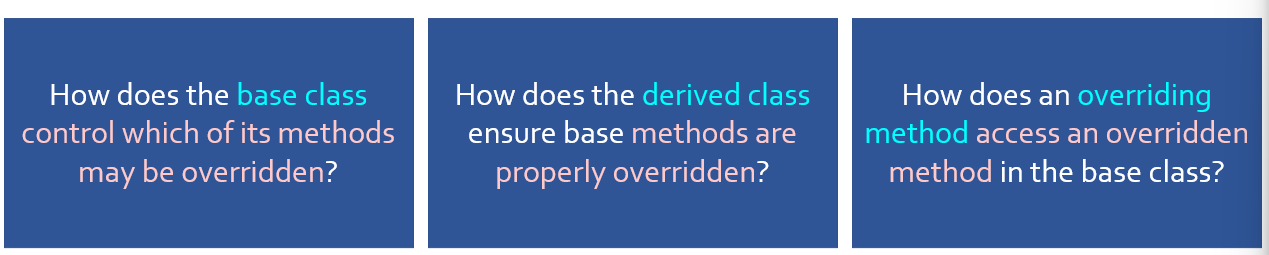
- base class can control which methods may be overridden, the derived class must ensure base methods are properly overridden, and overriding methods can access an overridden method from the base class
- you must designate which methods may not be overridden and in some langs als owhich may be overridden
- e.g., in C/C++ the
virtualkeyword designates the method to be allowed to be overridden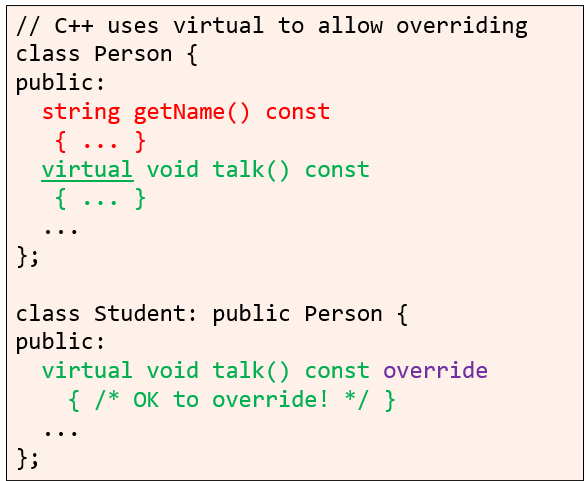
- C/C++ override keyword is optional but good for readability, by default non-virtual methods should not be overridden
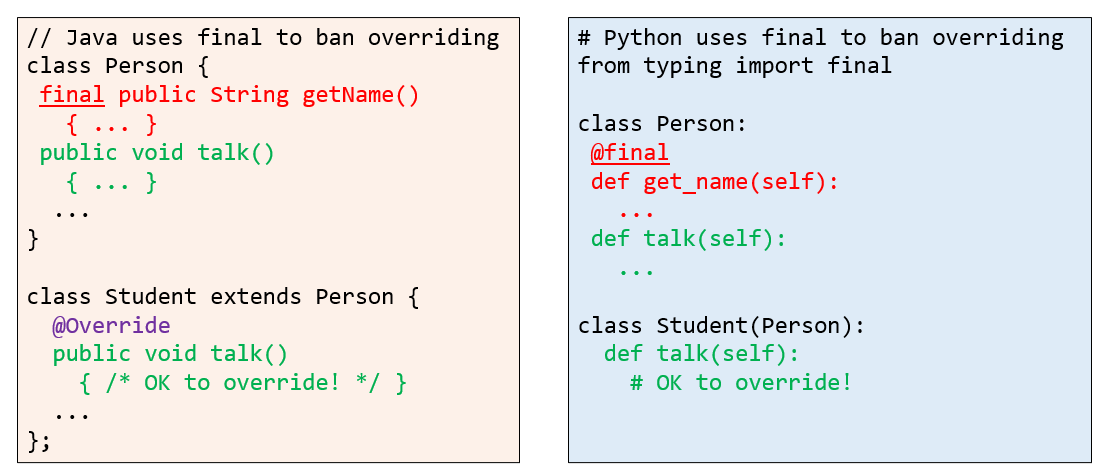
- e.g., in Java you can use the
finalkeyword designated methods that must not be overridden, something similar in Python
Derived class ensuring proper overriding
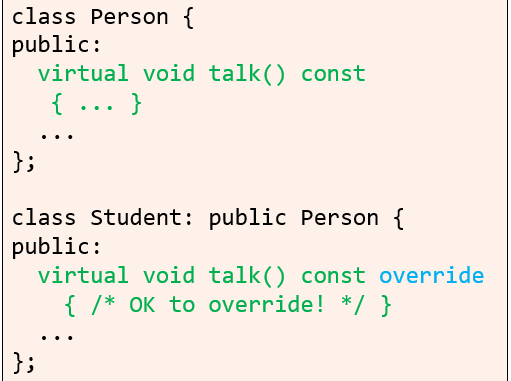
- some langs may require a keyword like
overrideto designate the method in the derived class is overriding a method from the base class - this is especially important so we don’t accidentally create new overloaded functions but isntead actually override the base methods to require new parameters
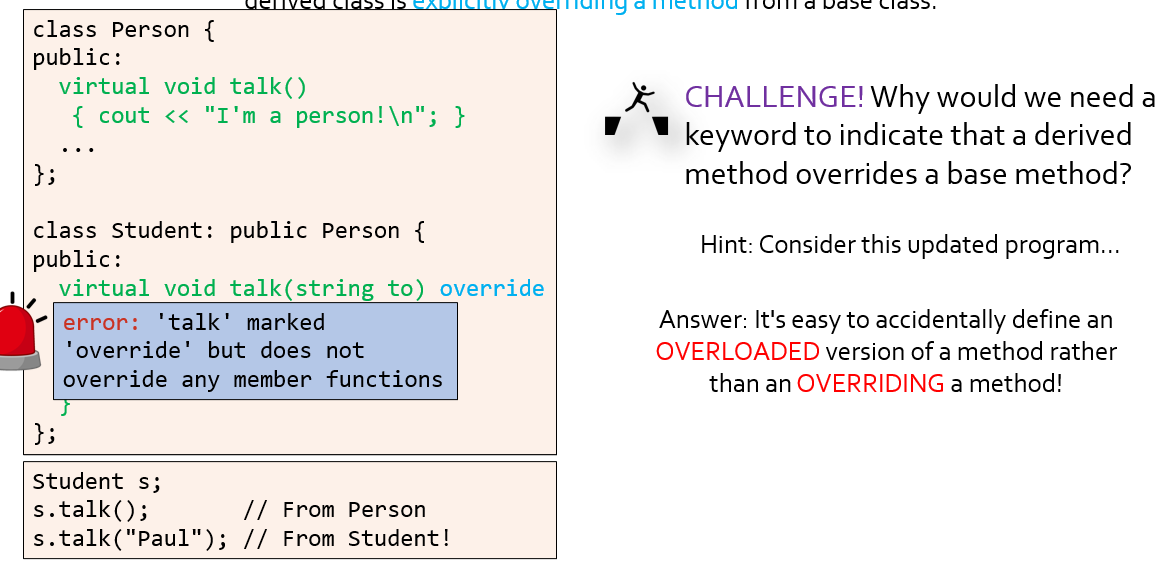
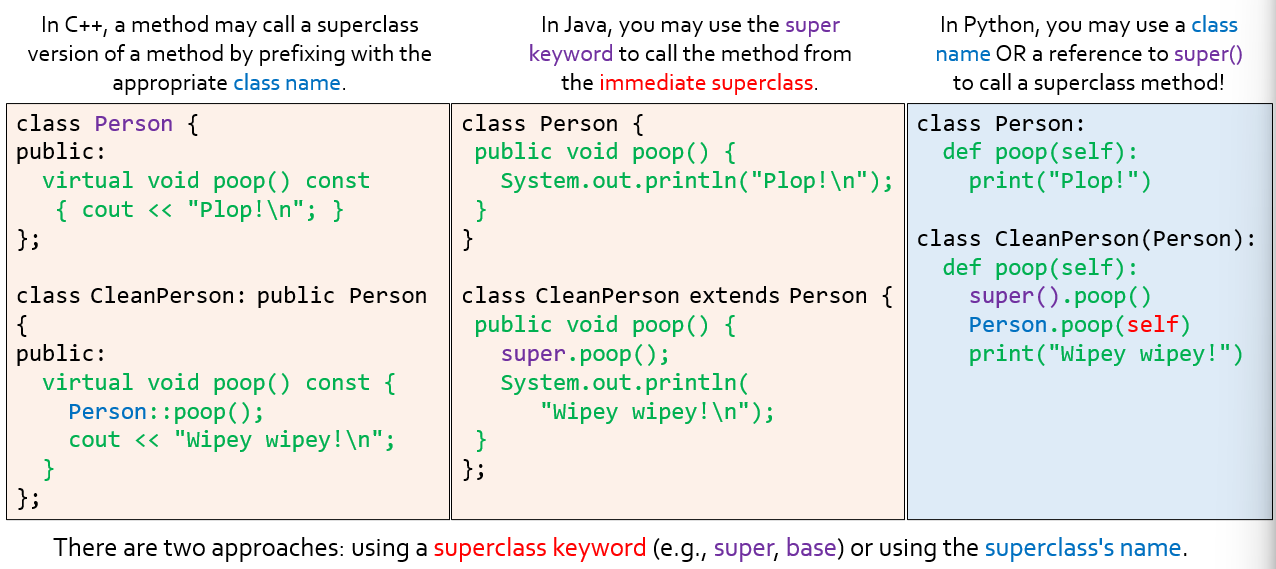
Calling overridden base methods from the derived class
- Either: using a keyword (
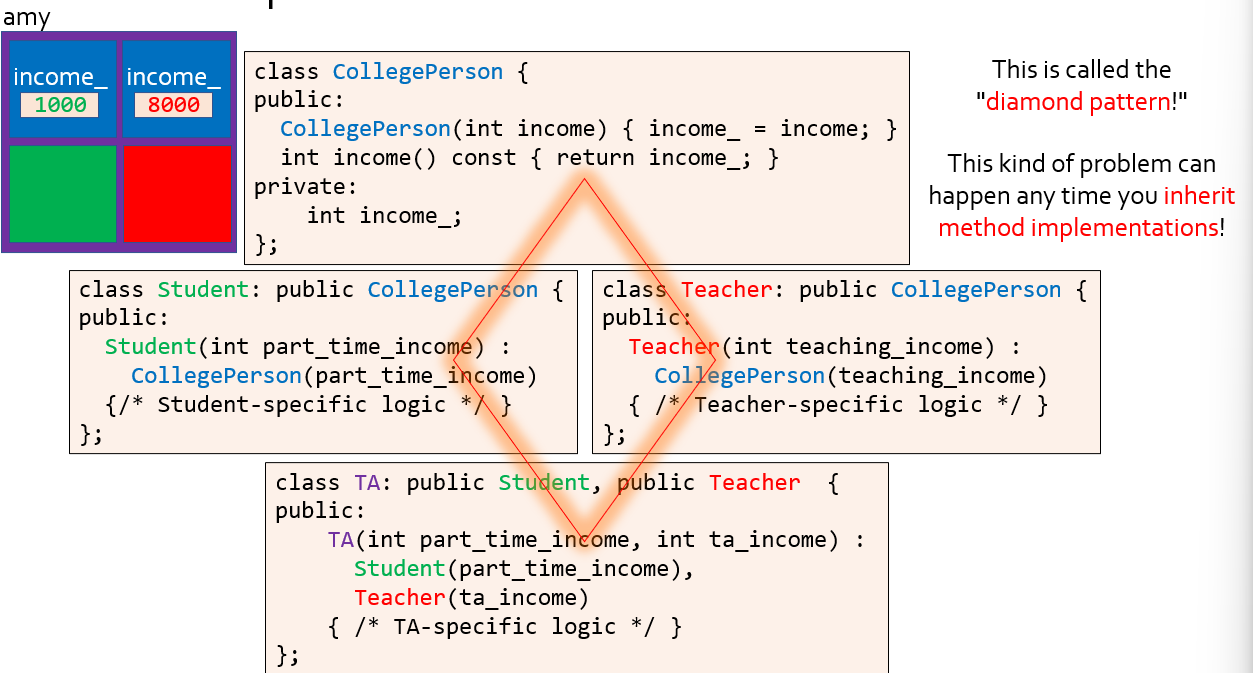
super, base) or using the base class name itself (Person) - some langs allow multiple subclass inheritance but this can cause issues later on
- the diamond pattern inheritance is not deterministic in which methods are inherited when they have the same signature across multiple base classes
- other langs only support multiple interface inheritance
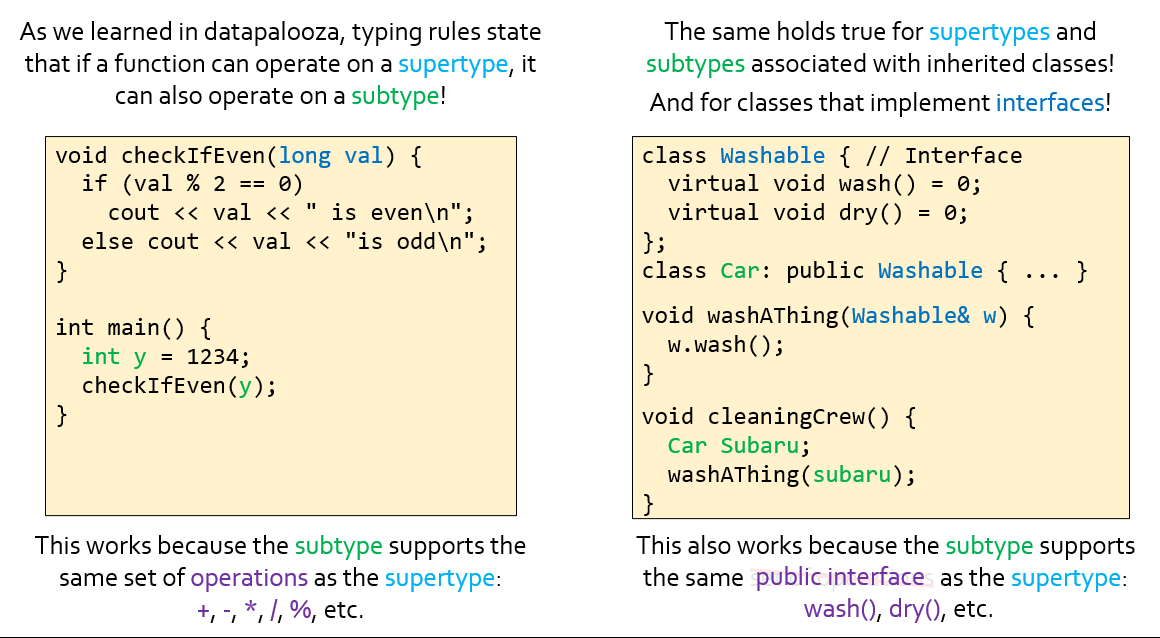
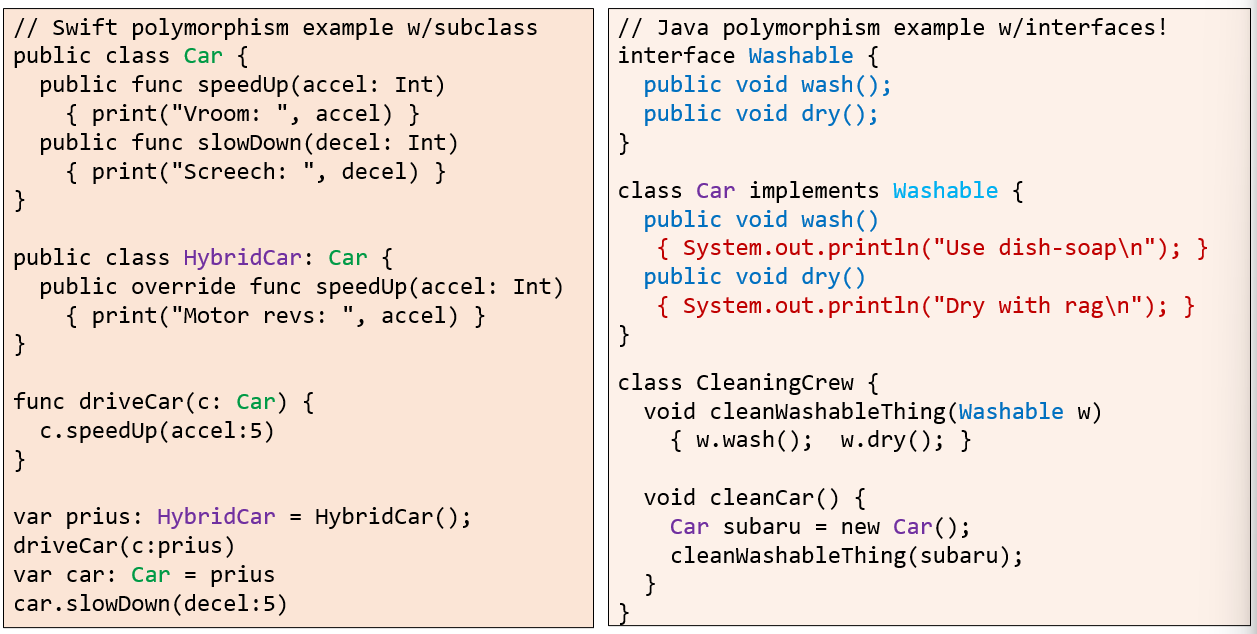
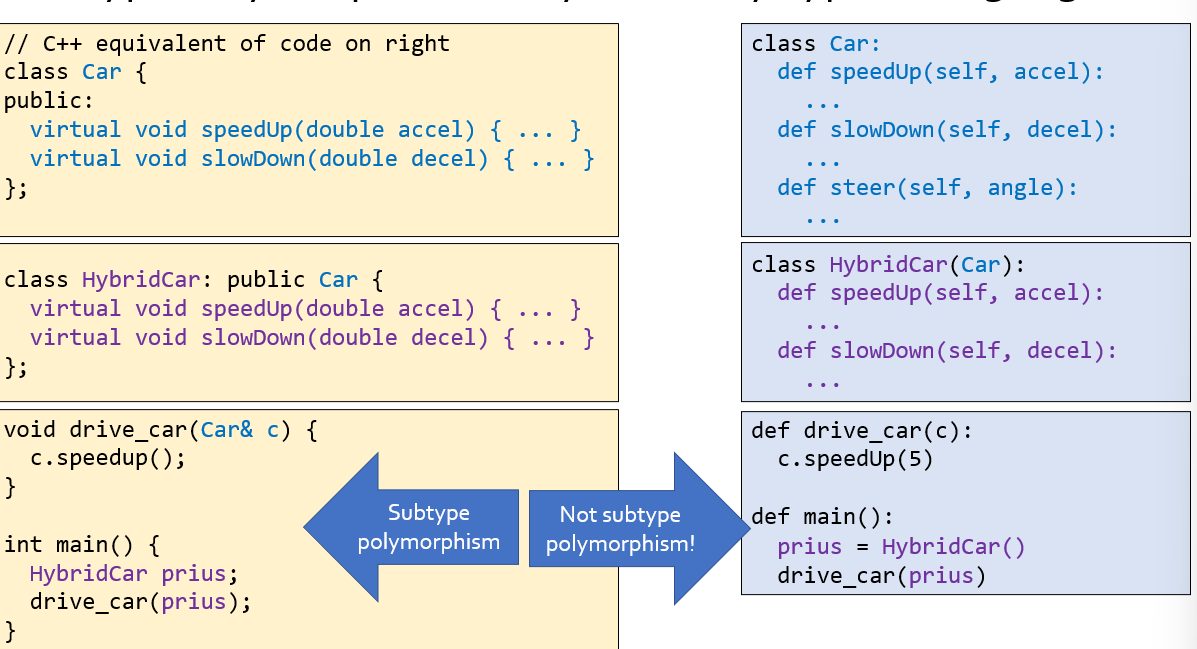
- being able to use a function that accepts a superclass object and can operate just fine on any subclass of the superclass e.g. a func on Shape obj should work fine on Circle obj
- this works because the subtype support the same public interface as the supertype
Liskov Substitution Principle
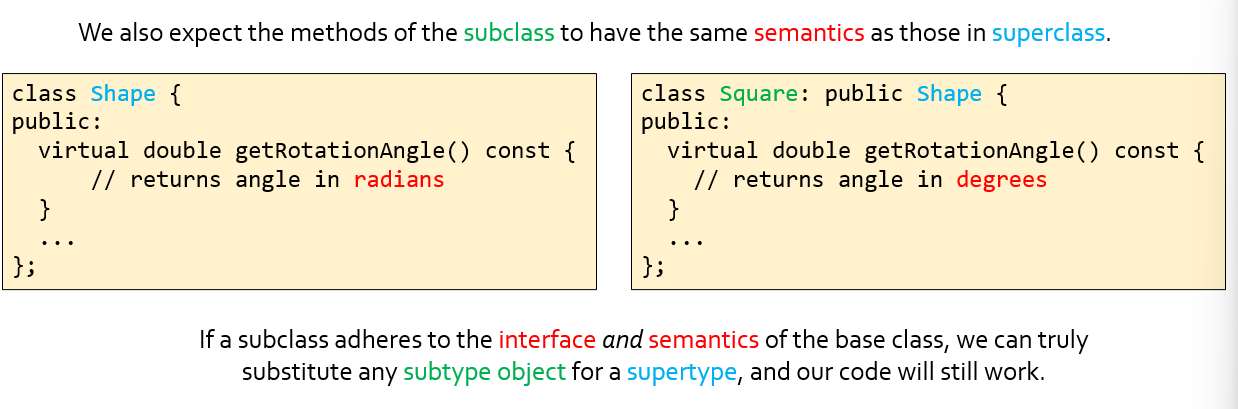
- we expect methods of the subclass to behave the same (have the same semantics) as the supertype
- this allows subtype polymorphism to work properly and behave properly
- e.g. Swift and Java subtype polymorphism
- this however is not required but still works in dynamically typed langs bc of duck typing
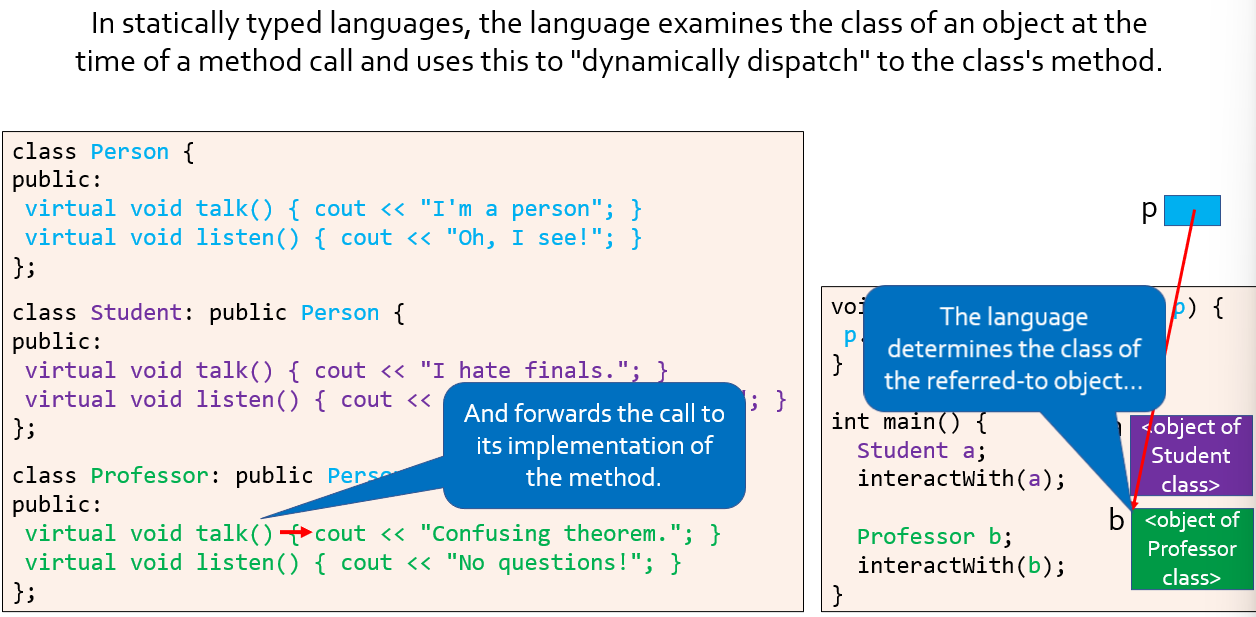
- how a lang determines which dot method to call: the base or derived method, etc.
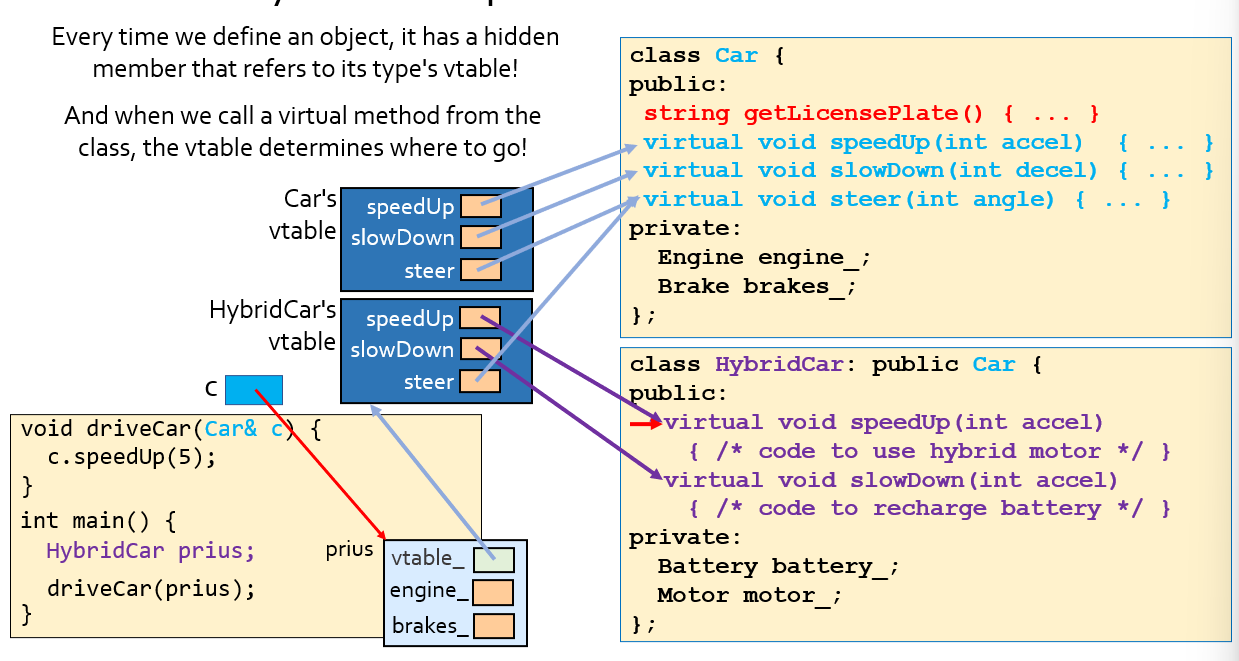
- in statically typed langs, each method has data on the class of object it is and points to that class’ implementation of the method
- this data that is stored for a class is the
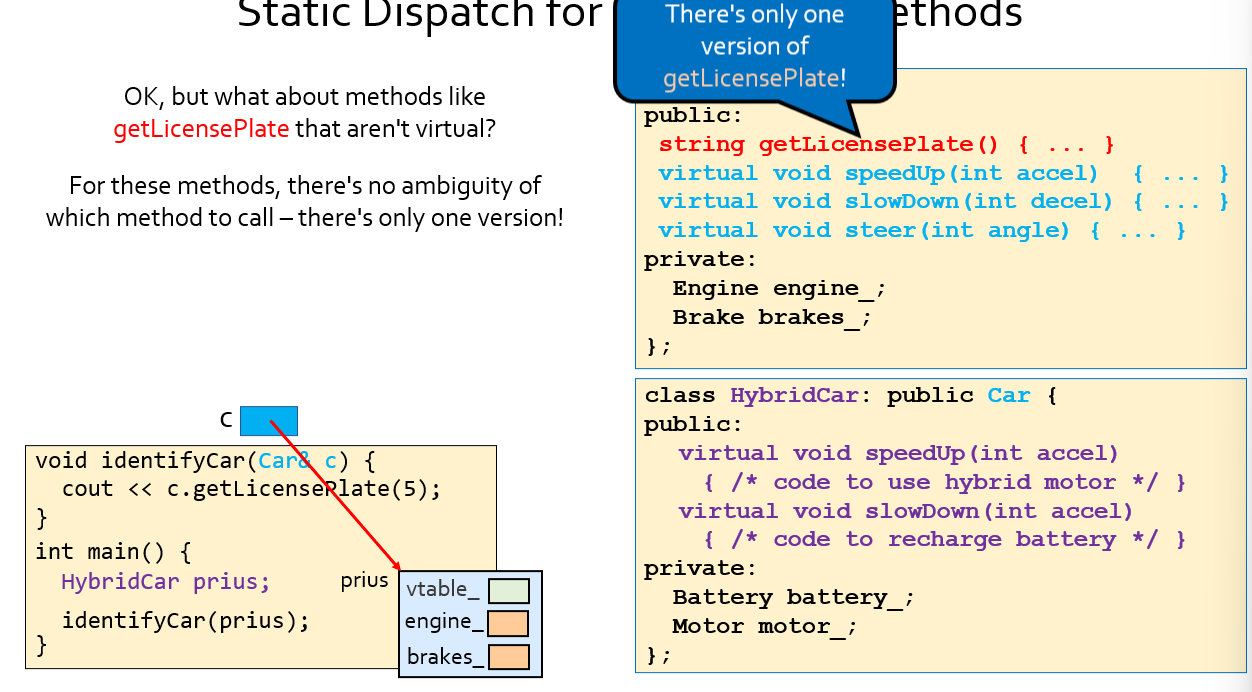
vtablethat points to which implementation to use for its available methods - for non-virtual (non-overridden) methods, there is no ambiguity so it “statically dispatches” to the non-virtual base class implementation
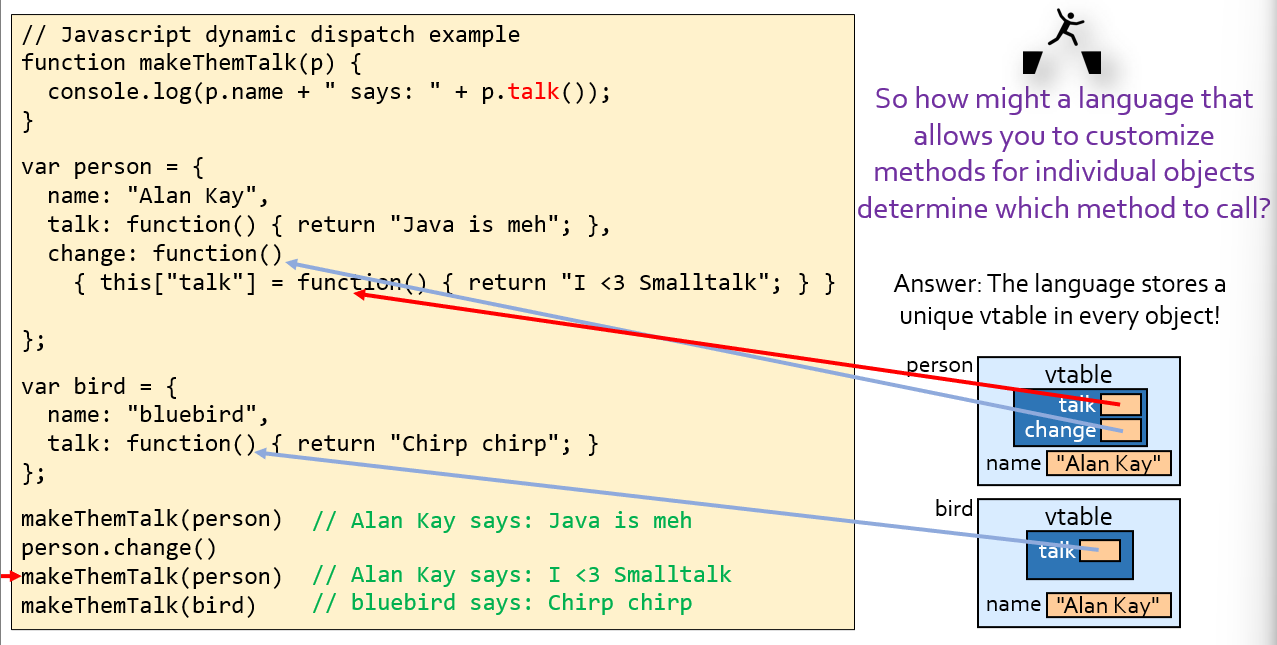
- in dynamically typed langs, class’ methods and fields can be dynamically added or removed so each object stores a vtable instead
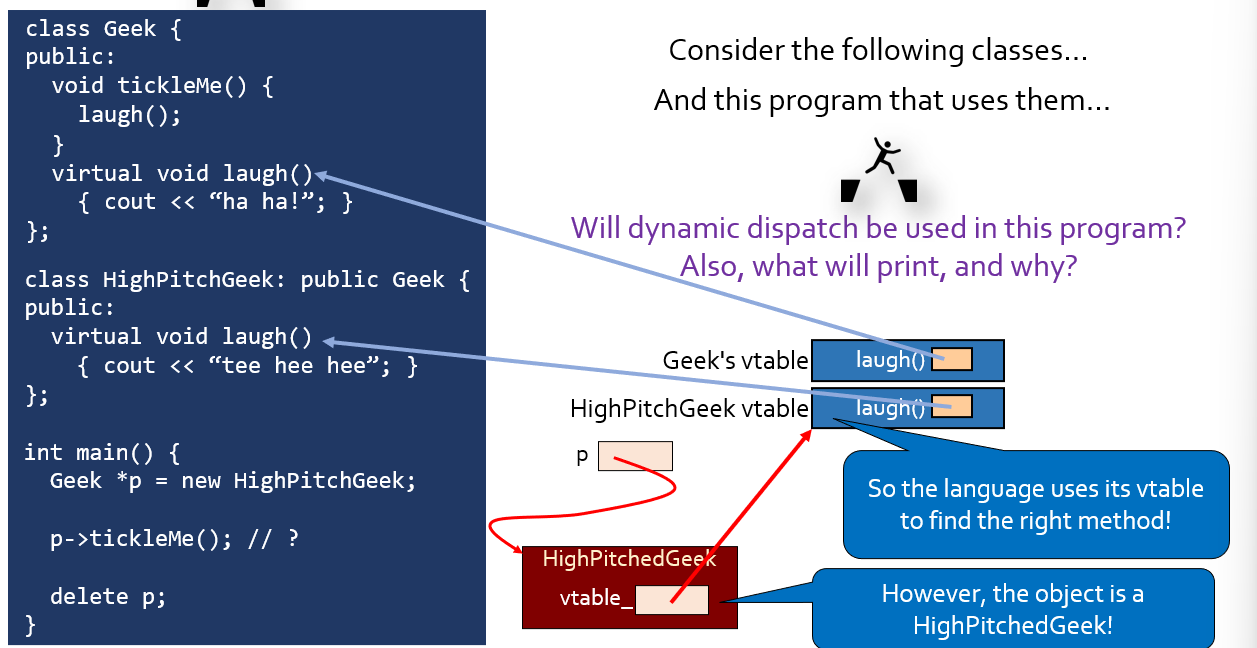
- even with subtype polymorphic pointers/vars, we still store the correct vtable